Wheelchair Transportation in Pennsylvania and Its Impact on Health & Accessibility
Wheelchair transportation has become an important lifeline for millions of individuals with mobility limitations. It enables access to essential medical care, social activities, and employment opportunities. As our population ages and the number of people with disabilities increases, the demand for reliable and accessible wheelchair transportation services has never been greater. Pennsylvania, with its growing senior population and diverse community of individuals with disabilities, is at the forefront of this need.
According to the Census Bureau’s 2020 population estimates, more than 55 million Americans are age 65 or older, with Pennsylvania ranking ninth in the nation for the largest population of older adults. In fact, 19.1% of Pennsylvania’s population is over the age of 65, highlighting a growing demographic that increasingly relies on accessible transportation options.
In this blog, we will discuss everything you need to know about wheelchair transportation, exploring its significance in medical care and addressing the various services, challenges, and innovations that shape this essential aspect of community health and support.
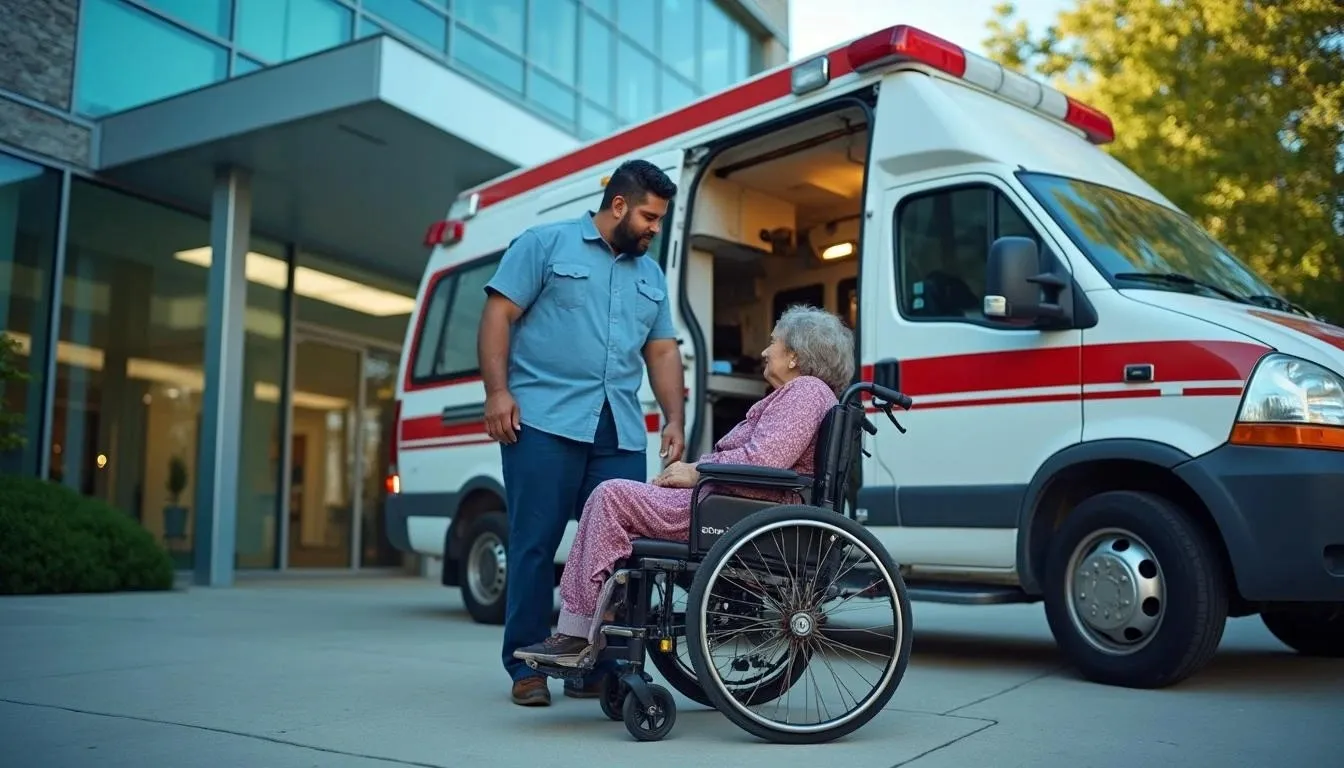
A healthcare provider assists an elderly woman in a wheelchair as they arrive at a healthcare facility.
The Benefits of Wheelchair Transportation in Medical Care
Wheelchair transportation services have become an essential component of modern healthcare, providing a vital link between individuals with mobility impairments and the medical facilities they need to access. These services significantly enhance the quality of life for countless individuals and contribute to improved health outcomes. Here are the top 6 benefits of wheelchair transport services:
Access to Healthcare Services
Wheelchair transport services ensure that individuals with mobility impairments can easily access essential medical care. This includes regular check-ups, specialist consultations, therapy sessions, and emergency care. Reliable transportation options enable patients to attend these appointments without fear of missing out on vital care, ultimately improving their health outcomes.
Better Health Outcomes
Studies have shown that transportation barriers can lead to missed medical appointments and delayed treatments, negatively impacting health outcomes. By facilitating regular medical appointments, wheelchair transport can significantly improve health outcomes. This includes reduced morbidity and mortality rates, better disease management, and increased life expectancy. Timely access to care can prevent complications, reduce the need for hospitalization, and improve overall quality of life.
Independence and Dignity
Wheelchair transportation empowers people with mobility limitations to live more independent and fulfilling lives. It allows them to participate in social activities, work, and pursue their hobbies. This increased independence and social engagement can significantly improve mental health and overall wellbeing.
Reduced Healthcare Costs
Regular access to preventive care and early intervention can help prevent serious health conditions and reduce the need for costly treatments. By facilitating timely medical care, wheelchair transportation services can contribute to long-term cost savings for individuals and the healthcare system.
Support for Caregivers
Wheelchair transport services can also reduce some of the burdens faced by caregivers. Many individuals with mobility issues rely on family members or friends for transportation, which can be demanding for caregivers juggling multiple responsibilities. By utilizing specialized medical transportation services, caregivers can ensure that their loved ones receive the care they need without compromising their own wellbeing.
Compliance with Treatment Plans
When patients can easily attend appointments, they are more likely to follow prescribed treatment plans. Consistent communication with healthcare providers enables better monitoring of health conditions and timely adjustments to treatment if necessary. Wheelchair transportation ensures that patients can receive follow-up care, medication management, and necessary tests. This promotes compliance and ultimately leads to better health outcomes.
To understand the numerous benefits of using a wheelchair transportation, read our blog post on “Benefits of Using Wheelchair Transport Company for Disabled People.”
A group of people in wheelchairs is being transported by a ride-sharing wheelchair transportation service.
Types of Wheelchair Transportation Services in Pennsylvania
There are four different types of wheelchair transportation services in Pennsylvania available to cater to varying needs and preferences. They are:
Non-Emergency Medical Transportation (NEMT)
NEMT services are designed to transport individuals who are not in immediate medical crisis but require assistance with transportation to and from medical appointments. These services often use specialized vehicles equipped with wheelchair ramps or lifts to accommodate passengers with mobility limitations. NEMT providers can be public or private entities, and their services may be covered by government programs or private insurance.
Paratransit Services
Paratransit services are public transportation options that provide door-to-door transportation for individuals who cannot use regular public transportation due to disabilities. These services often require advance scheduling and may have eligibility criteria. Paratransit vehicles are equipped with wheelchair lifts or ramps to accommodate passengers with mobility issues.
Volunteer and Community Transport Services
Volunteer-based and community transportation services, such as those provided by community organizations or churches, offer free or low-cost transportation to individuals with disabilities. These services are often flexible and can be customized to meet the specific needs of each passenger.
Private Transportation Services
Private transportation services offer customized transportation solutions for individuals with mobility issues. These services may be more expensive than public or volunteer-based options but can provide a higher level of comfort, convenience, and flexibility. Private transportation providers may use specialized vehicles equipped with wheelchair lifts or ramps, or they may provide transportation using standard vehicles with accessible features.
The Role of the ADA in Providing Wheelchair Transportation Accessibility
The Americans with Disabilities Act (ADA) is a civil rights law enacted in 1990 that prohibits discrimination against individuals with disabilities. The ADA has significantly improved the lives of millions of Americans by providing equal opportunities in employment, education, transportation, and public accommodations.
One of the most significant impacts of the ADA has been in the field of transportation. Title II of the ADA requires public entities, including state and local governments, to provide services in a manner that is accessible to people with disabilities. This includes transportation services such as public buses, trains, and paratransit services. Whereas Title III of the ADA extends accessibility requirements to private entities that offer public accommodations, including transportation services. This means that private transportation providers, such as taxis, ambulance services, and shuttle buses, must comply with ADA regulations to ensure equal access for individuals with disabilities.
For individuals who rely on wheelchairs, the ADA has been instrumental in improving access to transportation. By requiring public transportation systems to be accessible, the ADA has made it easier for people with disabilities to travel independently and participate fully in society.
Challenges Faced by Wheelchair-Bound Individuals in Accessing Transportation Services
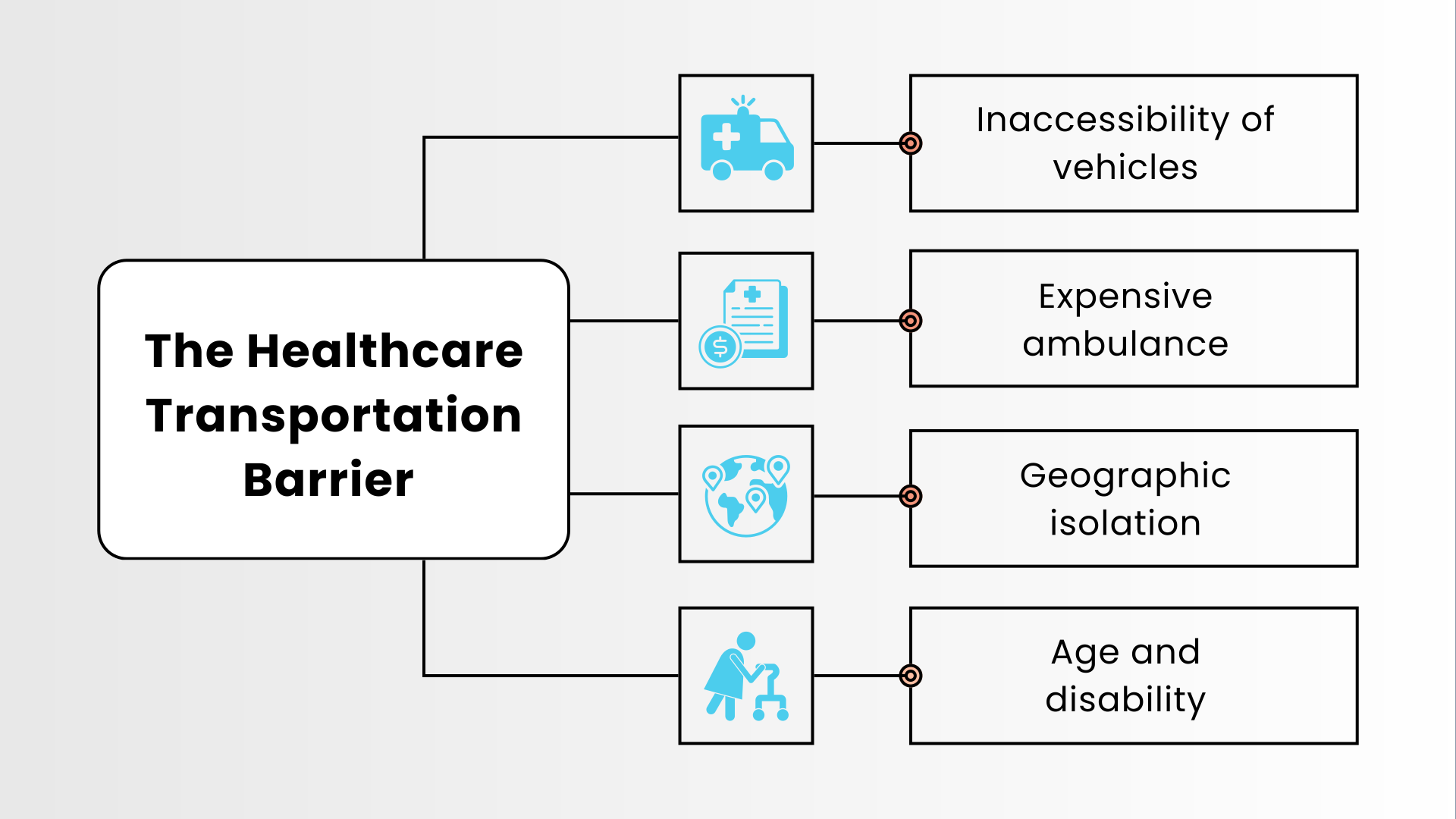
Individuals with mobility impairments, particularly those who rely on wheelchairs, often encounter significant challenges when accessing transportation services. These challenges can limit their independence, restrict their social participation, and hinder their ability to access essential services like healthcare. The challenges faced by wheelchair users include:
Limited Availability of Accessible Options & Inadequate Infrastructure
One of the most significant challenges faced by wheelchair users is the prevalence of physical barriers in the built environment. Many public spaces, including sidewalks, curbs, and buildings, are not designed to accommodate wheelchairs. Obstacles such as uneven surfaces, narrow doorways, and stairs can create significant barriers to mobility. Additionally, outdated transportation systems may lack accessibility features like ramps, lifts, and wheelchair-accessible seating, further limiting the mobility options for wheelchair users.
Driver Training and Attitudes
While many transportation providers aim to be accommodating, the level of driver training and awareness can vary significantly. Not all drivers are adequately trained to assist passengers with disabilities, leading to uncomfortable or even unsafe situations. Furthermore, negative attitudes and stereotypes about people with disabilities can manifest in various ways, such as impatience, dismissive behavior, or outright hostility.
Scheduling and Reliability Issues
Scheduling can be another significant challenge. Securing reliable and timely transportation can be difficult, especially in rural areas or during peak hours. Many transportation providers require advance notice for bookings, which can complicate spontaneous needs, such as urgent medical appointments or social gatherings. Additionally, the reliability of these services can vary widely. Instances of late arrivals, cancellations, or no-shows can leave individuals stranded or late for important commitments.
High Costs and Insurance Limitations
Wheelchair-accessible transportation can be expensive, particularly for individuals with limited financial resources. Many services, especially non-emergency medical transportation, may not be fully covered by insurance. This results in high out-of-pocket costs for individuals who are already managing expenses related to their disabilities. Such financial barriers can discourage wheelchair users from seeking necessary medical care.
Don’t let mobility limitations hold you back. Book wheelchair transportation services near me today.
Advancements and Future Trends in Wheelchair Transportation
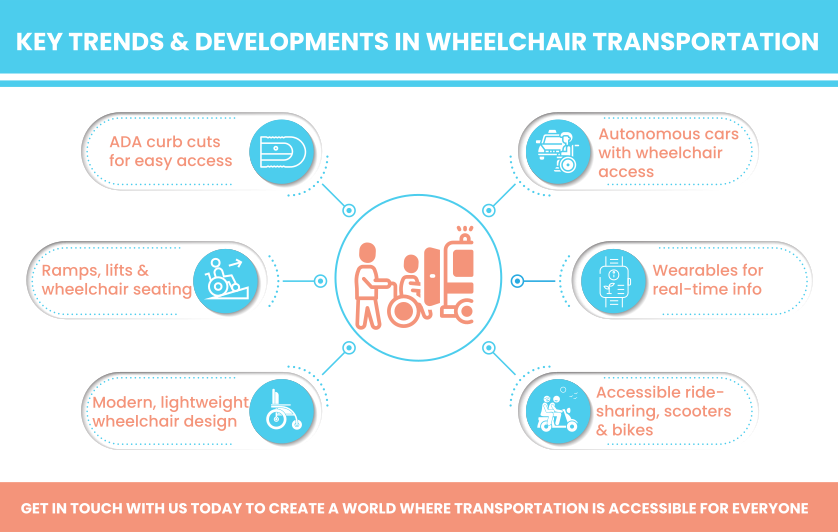
While challenges persist, significant advancements are being made to improve wheelchair accessibility in transportation. Here are some key trends and developments:
- Many cities and towns are investing in curb cuts that are compliant with ADA standards, making it easier for wheelchair users to access sidewalks and cross streets.
- Public transportation systems are increasingly incorporating features like wheelchair-accessible buses, trains, and stations. This includes ramps, lifts, and designated seating areas for wheelchair users.
- Newer wheelchair designs are lighter, more maneuverable, and equipped with advanced features like power assist and terrain-friendly tires.
- Self-driving cars and buses can be designed to be fully accessible, with features like wheelchair ramps and securement
- Wearable devices can provide real-time information about accessibility features and potential barriers in the environment.
- Ride-sharing and micro-mobility services, such as scooters and bikes, can be adapted to accommodate people with disabilities.