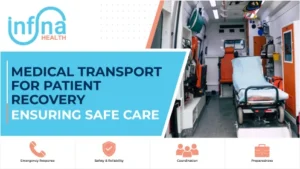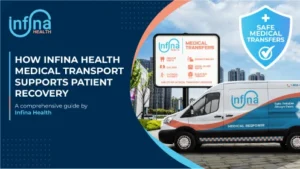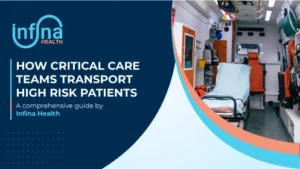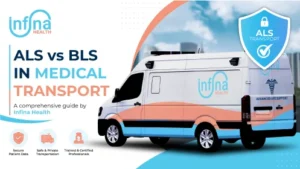

When it comes to healthcare, timing is critical. Delayed appointments, missed follow-ups, or gaps in care can directly impact a patient’s recovery and overall well-being. This is where medical transport for recovery becomes an essential part of modern healthcare systems, ensuring patients reach the right care setting without unnecessary delays.
Non-emergency patient transport plays a key role in maintaining continuity of care, especially for individuals transitioning between hospitals, rehabilitation centers, and home-based recovery. Safe and well-coordinated transportation reduces the risk of complications, supports consistent treatment, and ensures patients remain connected to the healthcare continuum.
At its core, effective medical transportation bridges the gap between treatment and recovery. Providers like Infina Health integrate patient-focused logistics, safety protocols, and coordinated care solutions to support every stage of recovery, all of which we’ll explore in detail throughout this guide.
Understanding Medical Transport in Patient Recovery
Recovery does not end at discharge; it continues through multiple stages of care that require consistent coordination and access. Medical transport for recovery refers to structured transportation services that support patients as they move from post-discharge care to rehabilitation and, in some cases, long-term care. This includes non-emergency patient transport designed to safely transfer individuals who may not require urgent care but still need medical supervision or assistance during travel. As part of a broader continuum of care transport, these services ensure that patients remain connected to every stage of their treatment journey.
The importance of medical transport becomes evident in its direct impact on recovery outcomes. Missed appointments can delay treatment plans, while inconsistent follow-ups may lead to complications or hospital readmissions. Effective patient transportation planning ensures that patients attend scheduled visits, maintain therapy routines, and receive timely medical attention. This not only supports continuity of care but also reduces the burden on healthcare systems by minimizing avoidable setbacks.
In practice, medical transport services are used across a wide range of recovery needs. Patients rely on these services for follow-up visits, dialysis sessions, physical therapy, and wound care management. They also play a critical role in long-distance transfers and specialized transport situations where patient comfort and monitoring are necessary. By aligning transportation with clinical needs, these services create a reliable pathway for safer, more efficient recovery.
How Medical Transport Supports Recovery and Patient Care
Medical transport plays a structured role across different stages of recovery, ensuring patients receive timely and appropriate care.
Maintaining consistent access to healthcare services is essential for recovery. Continuum of care transport ensures that patients can move seamlessly between different care settings without interruption. This includes timely patient transfer to care facilities, allowing individuals to attend follow-ups, rehabilitation sessions, and ongoing treatments without delays.
- Supports scheduled follow-up visits.
- Enables regular therapy and rehabilitation sessions.
- Prevents gaps that may delay recovery or worsen conditions.
Medical transport is not just about movement; it involves clinical awareness and patient safety. Services designed for recovery include trained personnel and structured protocols, especially for those requiring patient monitoring during transport. This is particularly important for individuals needing high-risk patient transport solutions, where health conditions require additional supervision.
- Trained staff assist with patient handling and mobility.
- Continuous monitoring during transit when required.
- Safer alternative to non-medical ride services for vulnerable patients.
Recovery often limits a patient’s ability to travel independently. Medical transport services address these challenges through patient mobility assistance services and inclusive mobility transport services that are designed for individuals with varying physical needs.
- Supports patients with disabilities or reduced mobility.
- Provides wheelchair and stretcher-accessible transport options.
- Ensure comfortable and stress-free travel during recovery.
Unlike standard rideshare options, these services are specifically structured to meet medical needs, combining accessibility, safety, and reliability to support the overall recovery process.

Key Benefits and Common Uses of Medical Transport in Patient Recovery
Medical stand-by services offer a specific medical cover for events where the organizers wish to have trained personnel on call during the event. This coverage can be provided for community festivals, sporting events, school functions, concerts, corporate events, and other activities where a medical response may be required, depending on the event and estimated demands.

Reduced Missed Appointments – ensures patients attend follow-ups, therapy sessions, and essential care visits through reliable medical transport coordination.
Improved Recovery Outcomes – supports consistent rehabilitation and post-treatment care within a structured continuum of care transport system.
Enhanced Patient Safety – minimizes risks during transfers, especially for individuals requiring patient safety transport services.
Lower Hospital Readmissions – prevents complications by enabling timely access to follow-up care and patient transfer to care facilities.
Family Peace of Mind – reduces stress for caregivers by providing dependable and professionally managed community health transport services.
Post-Surgical Transport – ensures safe discharge and recovery through specialized ambulatory transport for recovery and assisted mobility support.
Dialysis and Routine Treatments – maintains continuity for chronic care patients using dependable health and wellness transport services.
Physical Therapy Visits – enables long-term rehabilitation with consistent patient transportation planning.
Diagnostic Appointments – improve access to essential tests and evaluations through organized medical transport coordination.
Elderly and Disability Support – enhances independence with patient mobility assistance services and special needs transport services.
Medical Equipment Transport – supports safe movement of critical devices using structured recovery transport fleet services.
Group Transport for Medical Events – enables coordinated access through medical personnel deployment services and shared transport solutions.
Together, these benefits and applications highlight the essential role of structured medical transport in improving both patient recovery and overall healthcare efficiency.
Specialized Medical Transport Services for Diverse Patient Needs
After the acute care stay, safe transportation continues to be a concern. Facility transportation services can assist with patient transfers between healthcare facilities and facilitate the transport of patients to rehabilitation, follow up care, therapy, or other recovery-related facilities. Arranging for transportation for the patient during these transitions, based on their mobility needs and condition, can make the experience more comfortable and well organized. Here is how Infina Health makes it convenient and accessible.
These are designed for patients with limited mobility. A wheelchair transport recovery service provides accessible vehicles equipped with ramps or lifts, allowing patients to remain securely seated throughout the journey. These are offered by wheelchair and stretcher transport comps to ensure safe handling and consistent support. Their key features include:
- Accessible vehicles with ramps or hydraulic lifts.
- Safe and secure wheelchair positioning during transit.
- Trained staff assist with transfers and mobility needs.
Stretcher transport is essential for patients who are non-ambulatory or unable to sit upright due to medical conditions. Stretcher transport for patient care includes clinical supervision and a structured bed-to-bed transfer process, ensuring maximum safety throughout the journey. Following features ensure that patients receive consistent care throughout every stage of transport:
- Designed for patients requiring a lying position.
- Two-person trained teams for handling and transfer.
- Continuous supervision for medically sensitive cases.
Ambulatory services are suitable for stable patients who can walk with minimal assistance but should not travel independently. Ambulatory transport for recovery offers a cost-effective and efficient solution while still ensuring patient safety and support. These services focus on balancing independence with safety, ensuring patients can travel without unnecessary strain. Key features include:
- Ideal for post-procedure or outpatient recovery.
- Assistance available during entry and exit.
- Timely and efficient transport for routine visits.
These services provide personalized and flexible solutions for patients who require additional care during transit. Searching for private medical transport near me often connects patients with services that bridge the gap between emergency care and routine mobility needs. These services may also integrate advanced options such as mobile medical unit support for enhanced monitoring and rapid response. They offer:
- Customized care based on patient conditions.
- Flexible scheduling for appointments and transfers.
- Suitable for monitored, non-emergency travel needs.
In addition to these core services, recovery and event settings may require expanded transport options such as ambulance transport event support for on-site emergencies and coordinated mobility solutions. Selecting the appropriate transport type, whether wheelchair, stretcher, ambulatory, or private, ensures both safety and efficiency across patient recovery and healthcare events.
The Importance of Medical Transport in Hospital Discharge
Medical transport plays a critical role in ensuring safe and well-coordinated transitions after hospital discharge.
Hospital discharge marks a crucial shift from a controlled medical setting to home or another care facility. Patients at this stage are often medically fragile, recovering from procedures, or adjusting to new treatments. Non-emergency medical transport supports this transition by providing safe, structured movement that aligns with patient needs.
The discharge process comes with multiple challenges, including mobility limitations, safety concerns during transfers, and coordination gaps between healthcare providers. Without proper patient access services for recovery, these issues can lead to missed follow-ups, delayed care, and a higher risk of complications or readmission.
Reliable medical transport directly improves patient outcomes by reducing risks during discharge. Assisted transfers, trained personnel, and coordinated discharge planning ensure patients reach the right destination safely and on time. This structured approach supports continuity of care and creates a smoother, more secure recovery process.

Who Benefits Most from Medical Transport Services
Medical transport services are designed to support diverse patient populations.
Older adults often face mobility challenges and lack support for attending medical appointments. Senior mobility transport services are designed to provide safe, comfortable, and reliable access to healthcare, ensuring seniors remain consistent with their treatment plans.
These services maintain independence while ensuring safety through:
- Assisted mobility for clinic and hospital visits.
- Reliable scheduling for routine care.
- Comfortable design for age-related needs.
Patients managing long-term conditions require frequent and structured access to care. Services such as patient recovery transport in Pennsylvania support individuals attending dialysis, therapy, and routine check-ups, reducing the burden of repeated travel.
These solutions maintain treatment consistency through:
- Timely transport for dialysis and recurring treatments.
- Support for ongoing therapy and rehabilitation visits.
- Reduced fatigue and stress from travel logistics.
Accessible transportation is essential for individuals with physical or mobility limitations. Inclusive mobility transport services are specifically designed to accommodate diverse needs, ensuring equal access to healthcare services without barriers or delays in care access.
These services enhance accessibility and comfort through:
- Wheelchair-accessible and adaptive vehicles.
- Trained staff for safe handling and transfers.
- Reliable transport for routine and specialized care.
Medical Transport in Community Events and Mass Gatherings
Medical transport plays a critical role in ensuring safety and rapid response during community events and mass gatherings, where large crowds and high physical activity increase healthcare demands.
Effective event medical support begins with structured planning and coordination. Medical event safety services and sports event medical preparedness focus on identifying risks, evaluating crowd dynamics, and ensuring readiness before the event begins. Strong medical dispatch coordination services and overall medical transport coordination enable seamless communication across all teams.
- Identify potential health risks, crowd size, and activity intensity.
- Assess environmental factors such as weather and venue layout.
- Establish a centralized command system for real-time decision-making.
- Assign clear roles to medical staff and support teams.
- Use coordinated communication channels for efficient response.
During events, immediate access to care is essential. On-site medical response teams provide rapid triage and initial treatment, while paramedic support at marathons and similar events ensures readiness for high-exertion scenarios. Reliable emergency and standby transport and health event emergency transport allow quick transfers to hospitals when needed.
- Deploy medical tents and response units across key locations.
- Conduct rapid triage to prioritize patients based on severity.
- Ensure availability of trained paramedics and emergency personnel.
- Enable fast and safe transport to advanced care facilities.
- Coordinate with local emergency services for critical cases.
Modern event healthcare relies on flexible and inclusive solutions. Mobile medical unit support and mobile response transport units provide fully equipped, rapid-response capabilities across large venues. Services also integrate inclusive mobility transport services and patient mobility assistance services to ensure accessibility for all attendees.
- Deploy mobile units equipped for stabilization and treatment.
- Ensure accessibility for elderly, disabled, and high-risk individuals.
- Position response teams for quick reach across the venue.
- Support diverse medical needs with adaptable transport solutions.
- Enhance overall event safety through inclusive planning and response.
Infina’s Approach to Patient Recovery and Event Medical Support
A structured, integrated approach ensures both patient recovery support and event safety management.
Infina Health deploys trained EMTs, paramedics, and responders who provide immediate intervention when needed. EMT medical recovery services ensure patients receive professional care during transport or at event sites.
- Trained staff for emergency and routine patient care.
- Immediate response to medical needs.
- Support for both recovery transport and event health coverage.
Fully equipped mobile units enable rapid deployment to healthcare facilities or event locations. Mobile response transport units provide flexibility and quick access for patients requiring medical attention.
- Vehicles equipped for stabilization and treatment.
- Quick deployment for routine or emergency transport.
- Supports both individual patient recovery and mass event coverage.
Infina integrates its services with local healthcare networks for seamless transfers. Medical transport coordination ensures smooth transitions and continuity of care across settings.
- Streamlined patient handoff between facilities.
- Coordination with hospitals, clinics, and event medical teams.
- Efficient communication to optimize patient outcomes.
Partnerships That Strengthen Medical Transport Systems
Collaboration with healthcare and community stakeholders enhances service reliability and reach.
Coordination with EMS systems ensures faster handling of emergencies. Rapid Response EMS transport supports quick and efficient interventions.
Smooth patient transfers between facilities help maintain continuity of care. Healthcare continuum transport providers enable safe and reliable transport.
Partnerships with nursing homes and rehab centers provide ongoing mobility support for patients. Patient transfer to care facilities ensures consistent access to care.
Working with event organizers and public health initiatives promotes accessibility and inclusivity. Community health transport services allow seniors and individuals with disabilities to participate safely.
Infina Health Optimizing Medical Transport: Technology, Cost, and Workforce
Efficient medical transport depends on a balance of technology, operational efficiency, and accessibility, ensuring patients receive safe, timely, and cost-effective care.
Digital solutions enhance safety, reduce delays, and improve coordination. GPS-enabled vehicle tracking, real-time dispatch platforms, and remote patient monitoring ensure seamless operations. Medical transport coordination, patient monitoring during transport, and mobile medical unit support are key to effective service delivery.
- GPS and digital dispatch systems for real-time vehicle and patient tracking.
- Remote monitoring during transport to ensure safety.
- Integrated platforms coordinate resources and optimize response.
Infina Health provides scalable, affordable transport models that maintain high-quality care. Partnerships with hospitals, clinics, and long-term care facilities support access for diverse patient groups while ensuring operational efficiency. Transport services Philadelphia PA, patient mobility assistance services, and reliable mobility transport providers underline a commitment to safe, accessible transport.
- Flexible packages for events of any size or risk level.
- Ensure timely and safe access for all patients.
- Maintains service quality while optimizing operational costs.
A skilled workforce ensures patients are transported safely and professionally. Infina Health trains EMTs, paramedics, and drivers for specialized transport, including wheelchair, stretcher, and ambulatory services. EMT medical recovery services, patient safety transport services, high-risk patient transport solutions, and medical standby services for events highlight workforce expertise.
- Ongoing training on protocols, patient handling, and compliance.
- Specialized knowledge for mobility assistance and emergency response.
- Supports efficiency, coordination, and quality of patient care.
Conclusion: Enhancing Patient Recovery Through Reliable Medical Transport
Medical transport for recovery ensures patients receive continuous, safe, and effective care beyond hospital settings. From post-discharge support and non-emergency patient transport to long-term rehabilitation and community events, structured transport systems bridge gaps in healthcare access and coordination.
By combining trained personnel, specialized vehicles, advanced transport coordination, and community partnerships, providers like Infina Health improve patient outcomes and deliver safer healthcare experiences. Reliable medical transport services, including wheelchair and stretcher transport, ambulatory transfers, and private medical transport near me, strengthen patient care, reduce hospital readmissions, and support healthier communities.