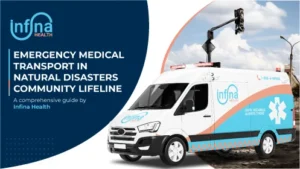
Emergency transport in natural disasters serves as a critical lifeline, connecting vulnerable populations to timely medical care. Rapid and coordinated transport ensures patient safety, maintains continuity of care, and supports swift medical response across affected communities. From ambulances and stretcher vans to specialized medical transport services, these systems bridge the gap between crisis points and healthcare facilities, enabling treatment and relief when every minute counts.
Within the context of this guide, Infina Health will provide an in-depth discussion of operational strategies, workforce preparedness, specialized transport options, and coordination frameworks that ensure emergency medical transport in disasters is efficient, safe, and dependable.
Emergency Transport in Disasters: Lifeline, Logistics, and Community Impact
Natural disasters such as hurricanes, floods, wildfires, earthquakes, and winter storms can strike suddenly, disrupting communities and healthcare systems. Emergency medical transport in disaster scenarios is a critical lifeline, ensuring patients are evacuated safely, vulnerable populations are protected, and medical care continues without interruption. EMS serves as a central pillar of public safety, providing rapid assessment, triage, and stabilization during mass casualty incidents, while also coordinating with multi-agency support when local resources are overwhelmed.
Timely and coordinated transport saves lives and maintains continuity of care. Ambulances, including Basic Life Support (BLS) and Advanced Life Support (ALS) units, stretcher vans, wheelchair-accessible vehicles, and specialized transport options are deployed based on patient needs. Preparedness protocols, disaster response plans, and community involvement enhance resilience, ensuring both patients and responders are supported during high-stress situations.
Beyond patient movement, transportation enables the rapid deployment of rescue teams and the delivery of essential supplies like food, water, medicine, and shelter materials directly impacting survival outcomes. By bridging affected populations with healthcare services, emergency transport not only addresses immediate medical needs but also strengthens the overall disaster response framework, emphasizing coordination, readiness, and operational resilience.
Types of Emergency Transport in Natural Disasters
Disaster response relies on multiple types of transport; each tailored to specific patient needs and conditions. Efficient deployment ensures that patients receive timely care while maintaining safety and continuity. Both public EMS systems and private providers play key roles when capacity is exceeded.
Basic Life Support ambulances provide essential care for stable patients, including monitoring and basic interventions. Advanced Life Support ambulances are equipped for critically ill patients, offering medications, advanced procedures, and continuous monitoring. Together, they form the backbone of emergency medical response during disasters.
These units are specially designed for urgent emergencies where every minute counts. They deploy quickly to assess, stabilize, and transport patients requiring immediate attention. Coordination of these units is critical to maximize survival outcomes during high-demand situations.
Non-ambulatory patients, elderly individuals, and those with chronic conditions rely on stretcher vans and wheelchair-accessible vehicles. These services ensure safe, dignified, and comfortable transport when immediate life-saving intervention is not required.
Helicopters and fixed-wing aircraft serve remote or critical cases. Equipped for in-flight patient care, these air medical services allow rapid transport to hospitals and specialized care centers, especially when ground routes are blocked or inaccessible.
Transport solutions for oxygen-dependent or dialysis patients are essential during disasters. Mobile clinics and medical RVs also carry staff, equipment, and supplies to affected areas, supporting ongoing medical operations and continuity of care.

Communication and Coordination: Backbone of Disaster Response
Effective disaster transport depends on robust coordination and communication systems. Seamless collaboration ensures patients reach care quickly; resources are used efficiently, and agencies can respond to dynamic challenges during natural disasters.
EMS teams act as first responders for urgent evacuations, triage, and patient stabilization. Ambulance fleets are dispatched strategically to cover high-need areas, ensuring rapid medical response even when local infrastructure is compromised.
Routing, surge capacity management, and fleet mobilization are critical. Centralized dispatch systems provide real-time updates, helping direct ambulances, stretcher vans, and wheelchair-accessible vehicles efficiently. This structured logistics approach minimizes delays and optimizes resource use.
Coordination extends across hospitals, fire, police, and disaster management teams. Integrated platforms enable fleet tracking, patient status updates, and rapid information sharing. Clear communication reduces errors, improves response times, and enhances patient safety.
Commercial logistics expertise strengthens disaster transport. Companies like UPS, FedEx, and DHL collaborate with FEMA and local authorities to deliver essential medical supplies and support large-scale evacuations. Public-private partnerships expand capacity, efficiency, and scalability in crisis situations.
Effective systems prepare before disasters strike. Pre-positioning vehicles and supplies, establishing transport contracts, and flexible planning for road closures or evolving conditions to ensure resilience. These measures enable rapid deployment and continuous care during emergencies.
Essential Teams Driving Disaster Transport
Several key entities work together to ensure disaster transport operations run smoothly. Their coordinated efforts are crucial for moving patients safely and efficiently during emergencies.
Below are the main teams that play a central role in disaster response:
They oversee and organize emergency transport across disaster zones. Their key responsibilities include:
- Coordinate and mobilize transport resources across affected areas.
- Arrange safe patient movement for ambulatory, stretcher, and wheelchair cases.
- Ensure rapid deployment and flexibility when demand surges.
They engage local volunteers and support public preparedness efforts. Their primary responsibilities include:
- Engage local volunteers and conduct public preparedness initiatives.
- Support safe evacuation and community awareness during disasters.
- Enhance overall effectiveness of response through local collaboration.
They are trained in disaster medicine to provide rapid medical care. Their core responsibilities include:
- Trained in disaster medicine and rapid deployment protocols.
- Provide critical care while coordinating with other emergency responders.
- Maintain high operational standards and readiness under pressure.
Core Features of Disaster Transport
Effective disaster transport relies on a combination of speed, preparedness, and adaptability. Key features include:

Rapid Deployment: Vehicles and staff mobilized quickly to affected areas, ensuring urgent medical needs are met.
Specialized Equipment: Availability of oxygen, stretchers, mobility aids, and other essential medical devices for patients with specific needs.
Equitable Access: Services designed to reach elderly, disabled, and mobility-impaired evacuees without delay.
Communication: Real-time coordination across agencies, leveraging centralized dispatch and integrated communication systems.
Workforce Preparedness: Trained emergency transport personnel ready to respond to high-pressure and disaster scenarios.
Multi-Modal Transport: Combining air, land, and sea options to navigate logistical challenges efficiently.
Pre-Disaster Planning: Coordination among stakeholders to optimize resource allocation and avoid duplication.

These features ensure safe, reliable, and efficient movement of patients and supplies while building trust and demonstrating compliance with safety and equity standards.
Case Studies: In Practice Emergency Transport
Real-world scenarios demonstrate how coordinated transport saves lives and maintains continuity of care during natural disasters.
During severe flooding in Pennsylvania, ambulance staff, NEMT brokers, and healthcare transport providers collaborated to relocate dialysis patients safely. Key responsibilities included:
- Coordinating stretcher and wheelchair van transport for non-ambulatory patients.
- Ensuring timely evacuation from affected areas.
- Providing continuous care during transit.
When a hurricane threatened coastal regions, nursing homes relied on specialized transport services. Evacuation efforts focused on:
- Prioritizing elderly residents with mobility challenges.
- Using non-emergency medical transport vans for dignified and paced relocation.
- Coordinating with nursing homes to maintain patient safety and continuity of care.
During wildfire emergencies, hospice patients required uninterrupted care. Transport providers ensured this through:
- Consistent monitoring and medical support by private medical transport teams.
- Integration with EMS and local authorities for safe evacuation.
- Maintaining comfort and dignity throughout the process.
Workforce & Training for EMS Disaster Response
Human resources and preparedness form the backbone of effective disaster transport. Skilled personnel, scenario readiness, and community engagement are all critical to ensure safe and efficient response.
EMS teams receive specialized training to manage disaster scenarios. Their core responsibilities include:
- Disaster medicine, triage, and patient stabilization.
- Managing stress, high patient volumes, and challenging conditions.
Regular simulations prepare teams for complex emergencies. Drills focus on:
- Evacuations, mass casualty incidents, and multi-agency coordination.
- Improving readiness, response time, and operational efficiency.
Disaster events may require additional staffing. Key strategies involve:
- Deploying volunteers, contract workers, and NEMT brokers.
- Rapid scale-up to meet increased patient and transport demand.
An informed public enhances overall disaster response. Initiatives include:
- Awareness programs on evacuation procedures and transport options.
- Strengthening community resilience and response efficiency.
Challenges & Barriers in Disaster Evacuation Transport Services
Emergency transport in disasters faces multiple challenges that can impact response time, safety, and equitable access. Understanding these barriers helps agencies plan and strengthen disaster medical transport systems.
- Infrastructure Collapse: Damaged roads, bridges, and highways limit access for ambulances and other emergency vehicles, posing a major hurdle in hazardous conditions of medical transport.
- Equipment Shortages: Limited availability of ambulances, stretcher vans, and wheelchair-accessible vehicles slows response during high-demand situations.
- Equity Barriers: Rural and low-income populations often face reduced access to emergency medical evacuation services.
- Communication Gaps: Failures in dispatch or integrated coordination systems hinder real-time transport decisions.
- Workforce Limitations: Insufficient trained EMS personnel and drivers can delay rapid response during peak disaster events.
- Logistics Coordination Challenges: Managing multi-agency fleets, patient transfers, and supply delivery requires precise planning and oversight.
- Environmental Hazards: Floods, fires, storms, and other extreme conditions disrupt transport operations and increase risk.
- Resource Allocation Conflicts: Prioritizing patients, supplies, and transport routes under pressure can strain disaster response efficiency, particularly in regions like Lehigh Valley PA.
Future Innovations for Resilient Emergency Transport Systems
Building resilient disaster transport systems requires innovation, careful planning, and the strategic use of technology. Emergency transport in disasters is increasingly reliant on tools and systems that improve speed, efficiency, and access for vulnerable populations. By integrating smart technology, public-private partnerships, and data-driven planning, EMS and medical transport providers can ensure rapid, equitable, and coordinated response when communities face hurricanes, floods, wildfires, earthquakes, or other emergencies.
Advanced dispatch software and fleet tracking systems enable rapid mobilization of ambulances, stretcher vans, and wheelchair-accessible vehicles. Data-driven routing helps avoid blocked roads, optimize travel times, and reduce delays, ensuring patients receive timely care even under challenging conditions.
Collaborations between EMS providers and commercial logistics experts expand response capacity when public resources are stretched. Companies with expertise in supply chain management assist in rapid deployment of vehicles, medical supplies, and equipment, strengthening the overall disaster response network.
Programs focused on equitable transport ensure elderly, disabled, and remote populations can access essential care. Mobile hospitals, medical RVs, and specialized vans bring healthcare directly to affected communities, maintaining continuity of care while reducing reliance on fixed facilities.
Pre-positioned resources, modular mobile units, and deployable field hospitals allow rapid scale-up during emergencies. Drones support first responders by delivering medications, mapping affected areas, and restoring communications in the crucial first 72 hours, providing real-time situational awareness and enhancing operational efficiency.
Conclusion
Emergency transport in disasters is a lifeline that saves lives, maintains dignity, and ensures equitable care for vulnerable populations. Timely coordination, skilled personnel, and advanced technology work together to deliver rapid disaster medical transport, bridging patients with essential healthcare even in the most challenging conditions.
From ambulances and stretcher vans to wheelchair-accessible and specialized vehicles, every mode of transport plays a critical role in connecting communities to care. Trust in these services is built through safety, compliance, and reliable operations. Planning, engaging communities, and partnering with experienced providers to strengthen preparedness and resilience. By prioritizing rapid, coordinated, and equitable response, natural disaster medical transport becomes more than a service; it becomes an essential community lifeline that supports health, safety, and recovery when it is needed most.