What Are the Roles of EMTs in Mass Casualties?
The situation covered in the emergency field: mass casualties (MCIs) is one of the hardest cases. Being either the product of natural disasters, massive road accidents, terrorism attacks, or industrial accidents, the situation includes numerous victims, potentially overwhelming the healthcare system present in the area. There, at the centre of a successful response, you will find Emergency Medical Technicians (EMTs). They are highly trained staff members who bring the order out of the chaos, save when the pressure is the greatest, and organize essential medical transportation services.
In this article, we will understand what a crucial role EMT play in MCIs, what steps they take, what equipment they employ and how they collaborate with medical transportation companies and other interested parties to provide timely care. We shall also help relate their work to the larger ecosystem of medical transport services, stretch transportation services and non emergency medical transportation brokers, all part of the emergency response ecosystem.
1. What are Mass Casualty Incidents (MCIs)
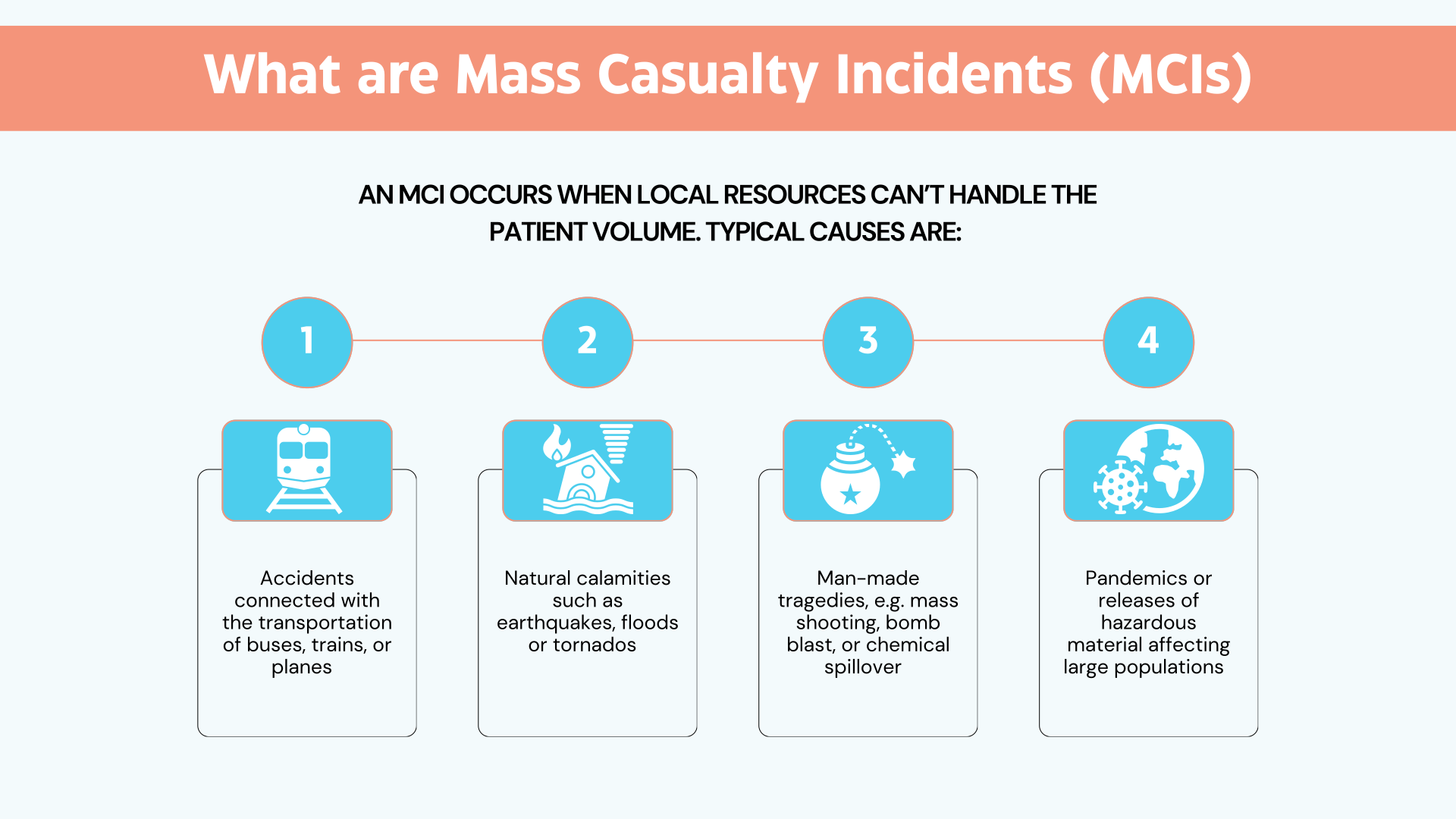
An MCI refers to any event where the local resources are not sufficient enough to address the number of patients. This value can be adjusted: e.g. a small town located in the countryside might deem a 10-patient crash a mass casualty, whereas a big city may only do so when dozens of people are hurt.
Typical causes are:
- Accidents connected with the transportation of buses, trains, or planes
- Natural calamities such as earthquakes, floods or tornados
- Man-made tragedies, e.g. mass shooting, bomb blast, or chemical spillover
- Pandemics or releases of hazardous material affecting large populations
Whatever the reason, EMTs and the related services of local ambulance services, hospital logistics services, and non emergency medical transportation vans must rush in to help.
2. First in the Scene and Last to Depart, EMTs
EMTs are usually among the first trained responders that go to an MCI. Their main duties are:
- Immediate analysis of scenes
- Keeping scenes safe to the responders and the victims
- Approximating triage systems
- Deployment of life saving interventions
- Liaising with dispatch centres such as Berks County communication centre
- Enabling transportation of patients to their homes after stabilization in less critical cases
EMTs in most of the MCIs are the caregivers, communicators, leaders, and problem-solvers. They tend to liaise with health transport partners, NEMT brokers, and medical transportation management teams to match the suitable resources and the patients.
3. Triage role in MCIs
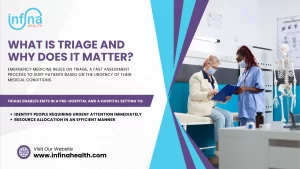
Triage is the triaging of patients depending on the severity of the injuries. EMTs implemented systems such as START (Simple Triage and Rapid Treatment) in MCIs to divide victims into following groups:
- Immediate (Red): Severe, life-threatening injuries that need emergency attention.
- Delayed (Yellow): Serious injuries that are not life endangering immediately.
- Minor (Green): Damaged enough to wait.
- Deceased/Expectant (Black): No signs of life, including no injuries compatible with survival.
Effective triage means a limited supply of resources, e.g., stretcher transport near me or ambulance service Philadelphia PA, is assigned to those who are in the greatest need.
4. Communication and Co-ordination
Smooth communication is essential in an MCI. EMTs use:
- Dispatch centres such as berks dispatch
- Digital platforms like Traumasoft login hospital to home and radios
- Liaison with medical transportation brokers in my area and non emergency medical transportation market players
EMTs assist medical transportation services in my area to allocate medical transport vans, stretcher vans and wheelchair transportation services by reporting the accurate number of patients, the complexity of their injuries and their resource requirements.
5. Transport: Patient Transport to Definitive Care
Once stabilized, EMTs organize transport of the patient to hospitals or trauma centres. Transport may be available as per the needs of the patient (depending upon the mode) like:
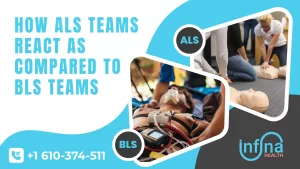
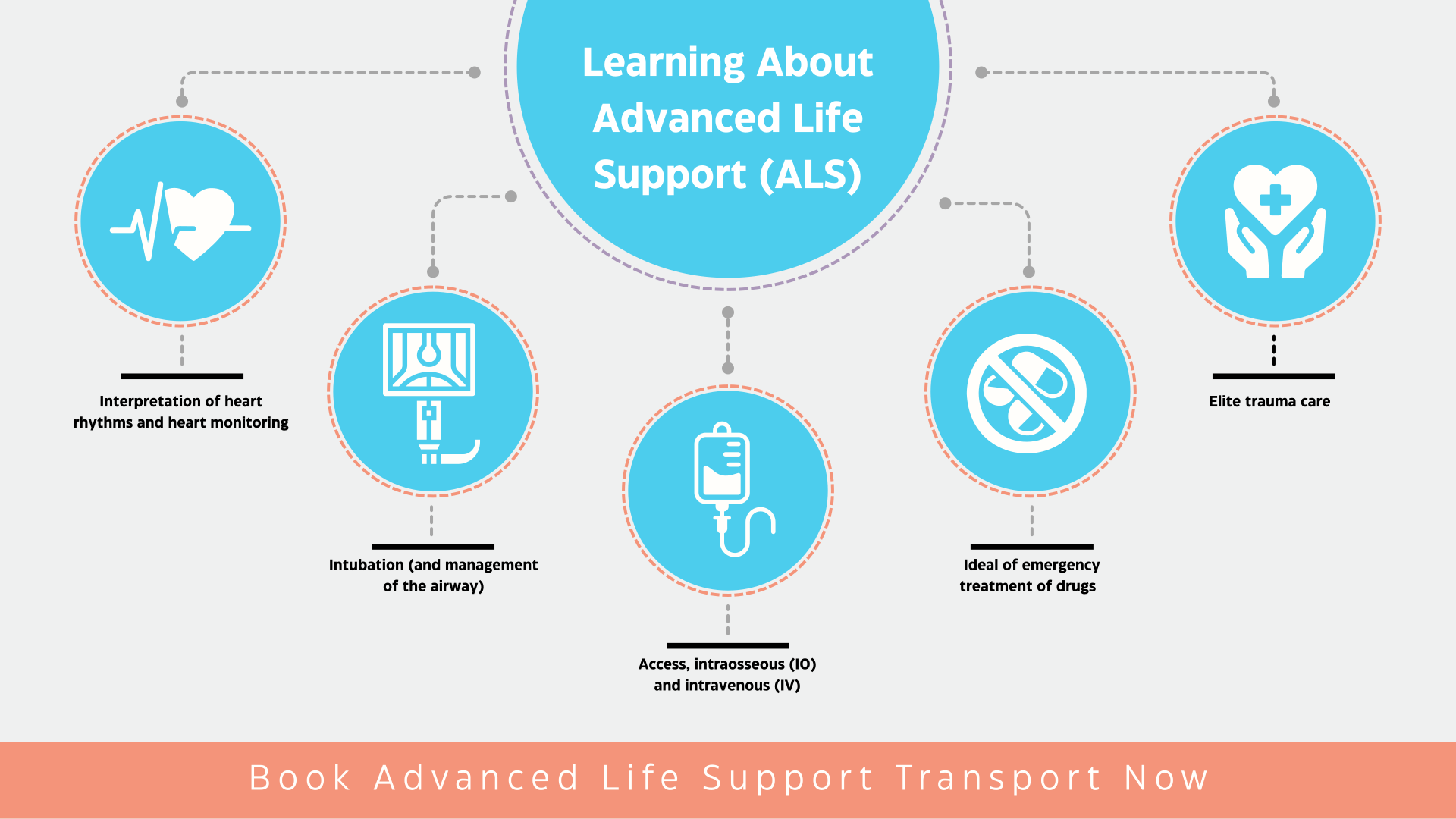
- Critical ALS ambulances of severe patients
- Stable patient Basic Life Support (BLS) units
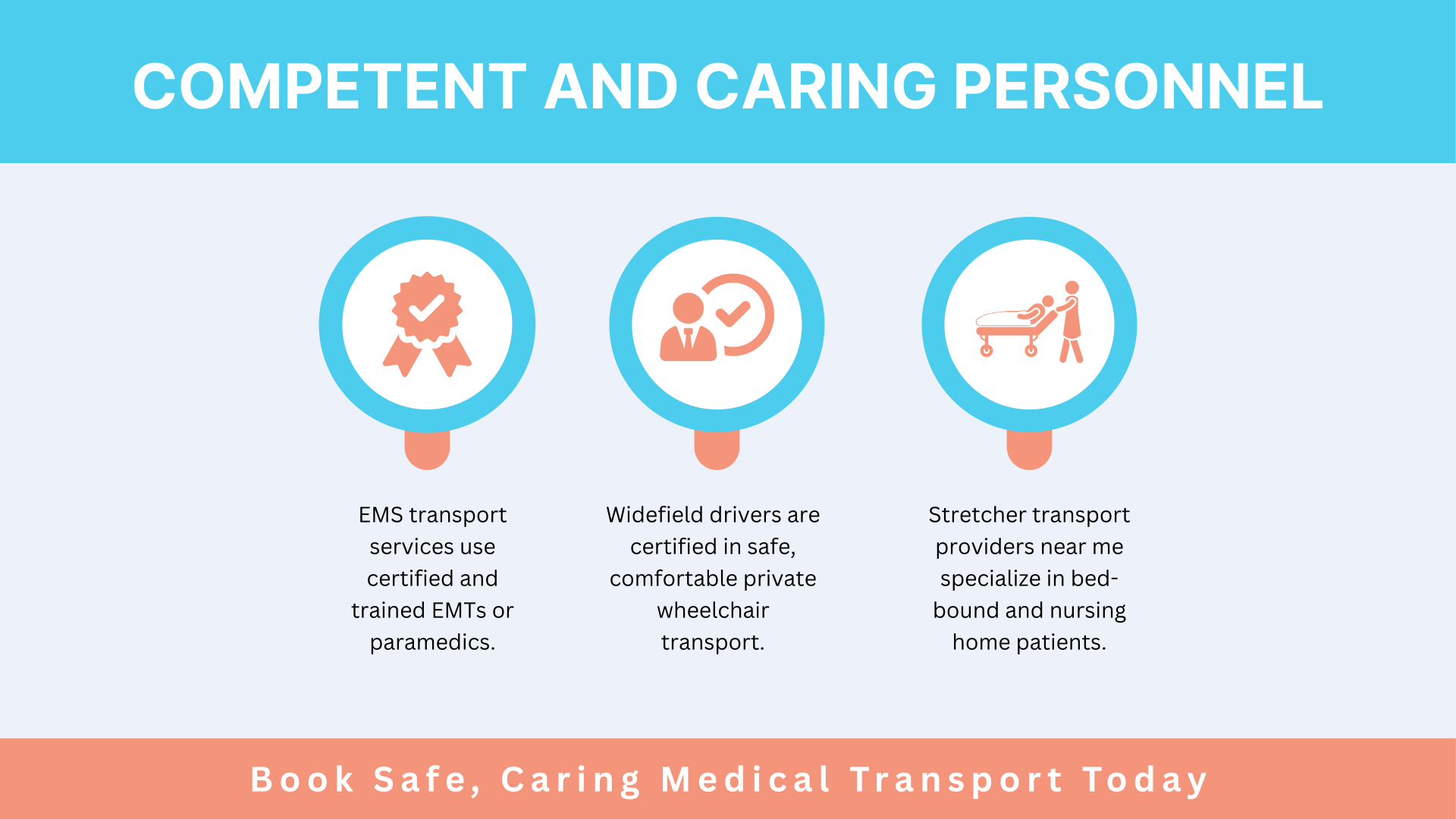
- Long distance stretcher transportation around me
- Private medical transportation near me for long distance transportation
The inclusion of the private medical transport, health ride, and sensible EMS into the chain of care means that all patients are taken to the right facility.
7. Difficulties EMTs have During MCIs
These are some of the greatest challenges:
- Resource scarcity: Insufficient ambulances, medical transport vans, or non-emergency medical transportation vans to the number of patients.
- Communication failures: Technology unable to cope or dispatch systems overwhelmed.
- Logistical challenges: Labelling administration and transportation to hospitals, organizing transportation in nursing homes, and cooperating with pa transportation services.
- Emotional impact: MCIs tend to be associated with high rates of mortality, traumatic injuries and long working hours.
8. The Contribution of Technology to EMTs
Modern MCIs use technology, including:
- The connected system of integrated medical systems between field teams and hospitals
- Medical transportation van GPS tracking
- Tracking of patients in real-time including the hospital capacity updates
- Medical transportation brokerage websites where medical transport company near me providers can be immediately dispatched
Other areas employ specialized transport services such as high touch transport, to easily deploy special vehicles, such as stretcher van transport or medical rv transport.
9. EMTs And Community Preparedness
Other than playing a recovery role in case of an emergency, EMTs also involve themselves with creating awareness on disaster preparedness, such as:
- Awareness campaigns to the public
- First aid/CPR training
- Partnering up with ambulance association of PA and western ambulance to bolster local capacities
Working with nursing home transportation managers to address the needs of nursing home transportation services.
10. Case Study: Organized Reaction to Hypothetical MCI
Consider a five-car crash on an interstate with 50 people inside. These are the local Western Berks Fire Dept, northern Berks EMS and West EMS alongside EMTs.
This is how it plays out:
- Primary triage groups patients together
- Critical patients are transported by ambulance in wheelchair or in stretcher transportation to the nearest trauma centre.
- Wheelchair ambulance or wheelchair van transportation is applied to stable but non-ambulatory patients.
- Medical transportation brokers align to the long-distance transfers with the use of private medical transportation services near me.
- Medvan transports patients who are sent to home in rural settings.
With this collaboration, the supplementation between emergency EMT business as well as non-emergency medical transportation pa systems is brought out.
11. The Connection between EMT Work and Medical Transportation Businesses
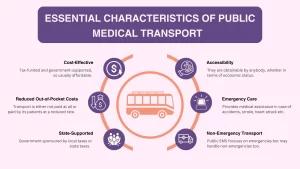
The medical transportation company network is crucial in the efficiency of EMTs when responding to MCIs. With these companies you get:
- Rapid deployment vans used in the medical field
- Localized transport wheelchair widefield service to specialized care
- Subsidized type of medical assistance transportation program PA
- Regional support transportation services Lancaster PA and transportation services reading PA
Individuals seeking medical transportation careers or medical transport jobs will find MCIs revealing of the importance of medical transport careers/jobs.
12. Conclusion: Petals Without Perfume of Crisis Response
EMTs are the glue that binds the emergency response system in the mass casualty incident. Triaging patients in an emergency period to coordinating with medical transport LLC, all medical transportation, and medical escort and transport, their efforts provide assurance that every patient arrives at the appropriate destination at the appropriate point in time.
The fact that they connect to the work of NEMT transportation brokers as well as hospital to home transportation service organizing companies and ambulatory transport services proves that the differences between emergency and non-emergency care blur on a massive scale when incidents occur.
Ultimately, be it the need to find a medical transport near me in case you have seniors or the question of why would focus transport dover de call me, keep one thing in mind that the world of medical transportation is highly interconnected, and EMTs stand in its core.
Required Action!
Mass casualty incidents require precision, speed and coordination, and EMTs are the hub of that mission. When your organization requires a provider of reliable medical transportation services near me, whether a wheelchair transportation company near me, stretcher transportation company, or others, reach out to a dependable medical transportation company near me that keeps safety, time, and compassion in mind.
Call us today to find out how our committed EMT trained teams with transportation experts can provide your patients with the right Immortal hospitality timely and always.