Under What Circumstances Is ALS Preferable Over BLS?
Advanced Life Support (ALS) or Basic Life Support (BLS) is determined by a patient-specific situation—the health condition and the type of medical care that the patient will need during transportation. ALS should be used when a patient has a critical condition, is unstable, or is likely to deteriorate quickly. ALS is specially equipped to provide high-level medical care, constant care, and life-saving services that the BLS teams cannot offer.
Major Scenarios That Require ALS
When patients have life-threatening symptoms or complicated medical conditions and need urgent clinical support, they should choose ALS for transport.
These include:
- Severe chest pain or heart attack.
- Breathing problems or shortness of breath.
- Confusion, slurred speech, or paralysis are symptoms of stroke.
- Coma or disturbed state of mind.
- Convulsions or long convulsions.
- Severe trauma or bleeding on the inside.
- Drug overdose or poisoning.
In this, ALS teams will be able to offer real-time treatment, not just transportation, which can greatly enhance patient outcomes.
The Difference Between ALS Response and BLS in Emergencies
The rate at which each team is able to respond to medical emergencies quickly and efficiently is one of the largest distinctions between ALS and BLS. Although BLS teams are dedicated to stabilization and quick transportation, ALS teams are prepared to examine, diagnose, and treat patients in the field.
ALS providers can:
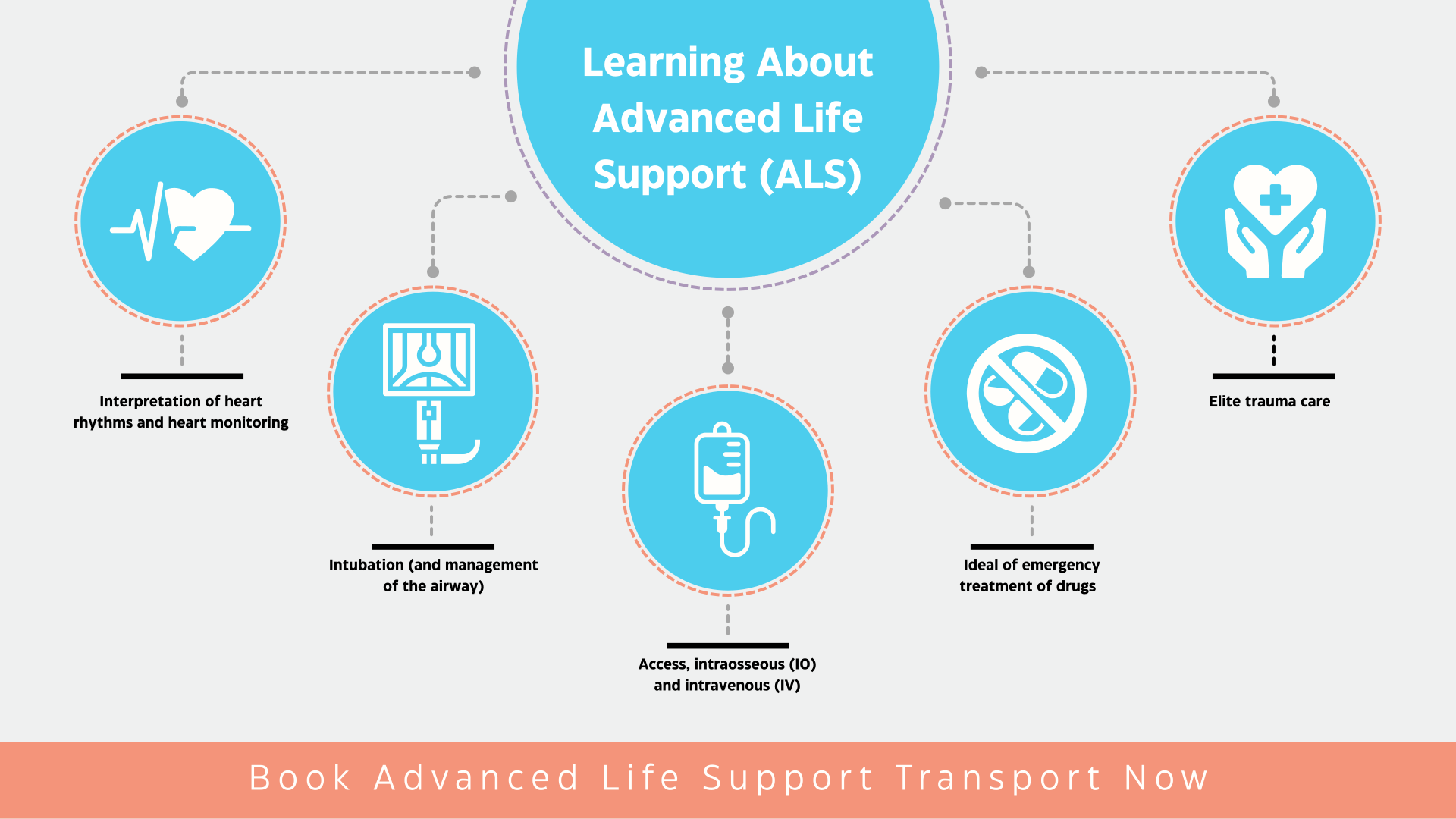
- Initiate IV salts and give vital medications.
- Do high-level airway care, such as intubation.
- Measure the heart activity with ECG and react to abnormalities.
- Provide defibrillation and advanced cardiac life support.
This is a proactive measure that ensures that patients are given care at hospital standards even before they arrive at the hospital, which is particularly important when time is of essence.
When BLS Is Not Sufficient to Keep the Patient Safe
BLS can be used in stable patients who do not need invasive therapy and invasive monitoring. But it may not be adequate when:
- The condition of the patient is either unpredictable or deteriorating.
- Constant cardiac or respiratory control is required.
- Special drugs are to be used in transit.
- Complications along the way are highly probable.
Under these circumstances, critical treatment may be delayed with the use of BLS only. By selecting ALS, any medical emergency that may arise suddenly can be addressed instantly.
ALS Interfacility and High-Risk Transfers
Interfacility transfer of critically ill patients is also best done with ALS. The following are usually required by patients who are transferred between hospitals due to specialized services like cardiac treatment, intensive management, or post-surgical treatment:
- Constant vital signs are checked.
- Advanced oxygenation.
- Medication infusions.
- Proficient paramedic oversight.
The ALS crews serve as a kind of link between healthcare institutions, ensuring continuity of care and reducing risks throughout transportation.
Why ALS Improves Patient Outcomes
The benefit of ALS is that it involves transportation with high-level medical services. Intervention early in the disease process may include drug therapy, controlling airways, or interpretation of ECG findings; this could decrease complications, benefit survival, and accelerate treatment of patients arriving at the hospital. Patients who are in a critical state do not simply have a means of transport: ALS is their life raft as an extension of emergency services.
Final Solution: When Should a Patient Select ALS?
All patients are urged to take ALS over BLS when their conditions need high-level medical care, constant care, or urgent care when they are being transported. In the case of any threat of deterioration or specialized attention, ALS is the more suitable and safe option. This knowledge of this difference can lead to informed choices by patients and caregivers to ensure safety, speed, and quality of care.
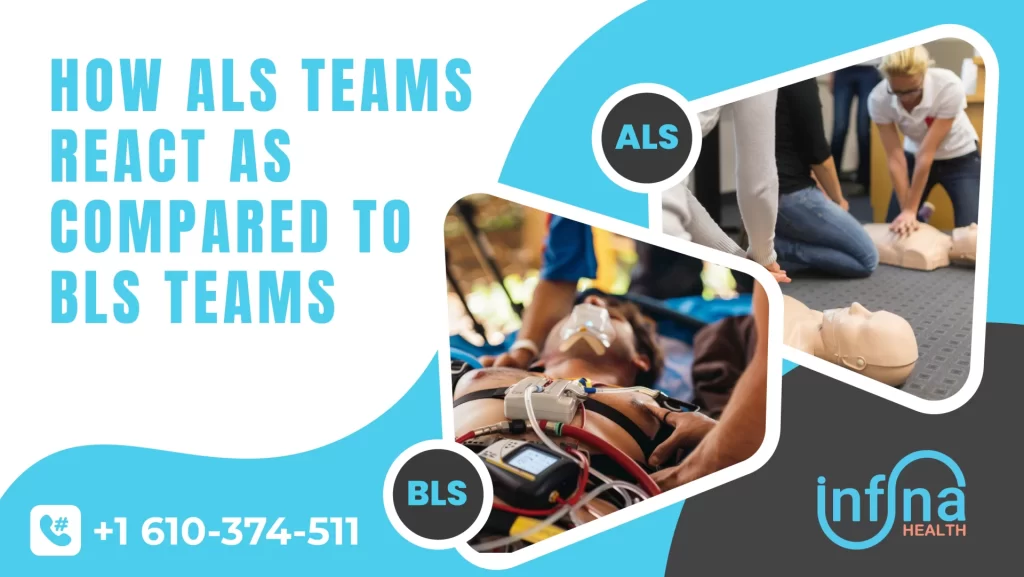
How ALS Teams React as Compared to BLS Teams
In a medical emergency, minutes and even seconds can mean the difference between life and death, and the nature of prehospital care team sent can affect an outcome. Nearly everyone is familiar with an ambulance when they see one, but not many people realize that there are two categories of emergency medical care that have different responsibilities and capabilities–the first level which is Basic Life Support (BLS) and the second one being Advance Life Support (ALS).
What Is Basic Life Support (BLS)?
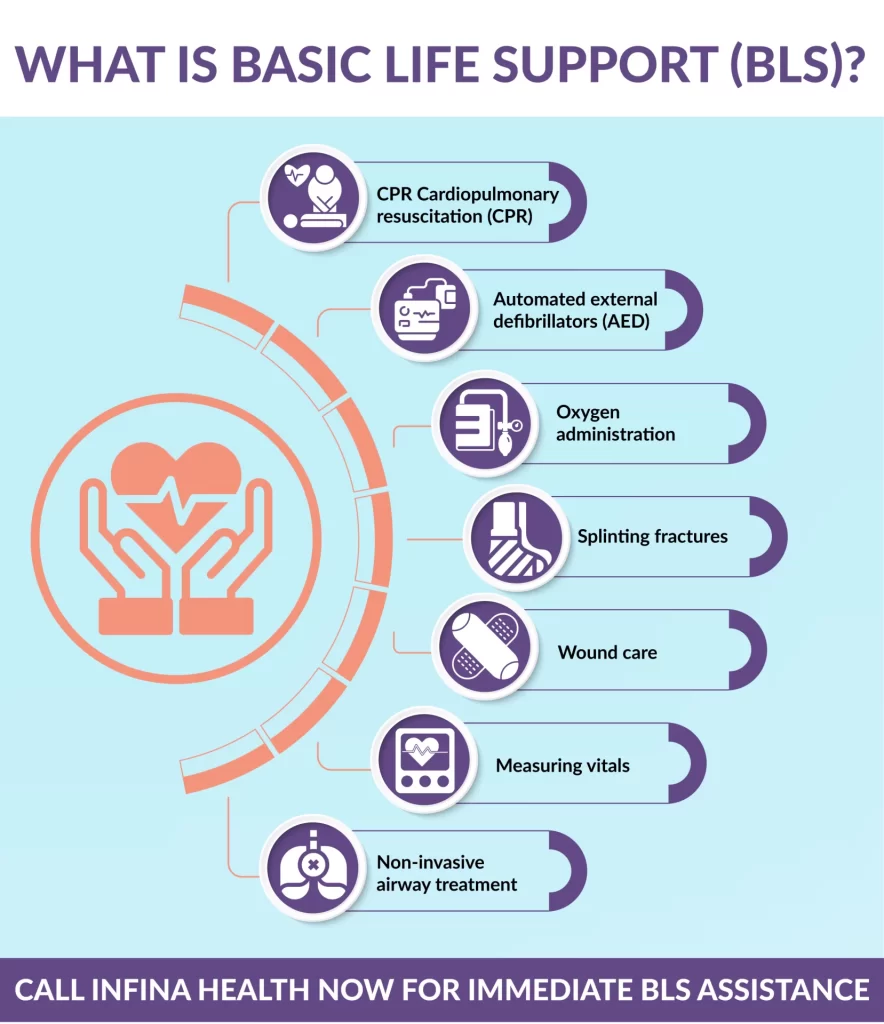
Basic Life Support (BLS) means non-invasive urgent care given by Emergency Medical Technicians (EMTs). BLS is aimed to support the patient in a rather stable state or not-so-critical conditions and is conducing to the basic prehospital care that includes:
- CPR Cardiopulmonary resuscitation (CPR)
- Automated external defibrillators (AED)
- Oxygen administration
- Splinting fractures
- Wound care
- Measuring vitals
- Non-invasive airway treatment
BLS providers are not allowed to manage other medications outside oxygen, glucose (diabetes patients) or epinephrine using an auto-injector. They are not meant to perform advanced treatment; their job is stabilization and transportation.
What is Advanced Life Support (ALS)?
Advanced Life Support (ALS) It is a superior form of prehospital care usually administered by paramedics or critical care nurses who have received special training in advanced operations and drug administration. ALS teams are prepared and trained in life-threatening emergencies, which include:
- Cardiac arrest
- Stroke Respiratory failure
- Severe trauma
- Poisoning or overdose
- Seizures
- Important elements of ALS care are:
- IV therapy
Advanced airway intervention (e.g. endotracheal intubation)
- The interpretation of electrocardiogram (ECG)
- Monitoring and defibrillation of the heart
- Pain, seizures, sedations, arrhythmia, etc., treated with drugs.
When every second counts, trust Infina Health ALS teams to provide the expertise in care.
Training and certification: ALS and BLS
| Category | BLS (EMTs) | ALS (Paramedics) |
| Education Time period | 120–150 hours | 1,200–1,800+ hours |
| Certification | NREMT (EMT level) | NREMT (Paramedic level) |
| Medication Use | Very little (e.g., glucose, epinephrine auto-injector) | Very extensive (e.g., morphine, cardiac medication, sedatives) |
| Airway Management | Basic (oropharyngeal /nasopharyngeal) | Advanced (intubation, ventilators) |
| ECG | No | Yes |
| IV Access | No | Yes |
Paramedics receive 10-15 times the number of training hours than those of EMTs and are qualified to conduct intricate life-saving preoperative procedures.
Clinical Decision-Making and Scene Assessment
Clinical judgment and scene triage is one of the most important distinctions.
BLS Teams:
- Concentrate on stabilizing the patients and fast transport.
- Stick to the rigorous procedures of trauma, cardiac, and stroke evaluations.
- Reach out to ALS in case the condition of the patient deteriorates.
ALS Teams:
- Conduct diagnostic practices on occasions.
- Start critical interventions prior to coming to the hospital.
- Select between transporting a patient urgently and stabilizing them on the spot.
In many cases ALS teams also collaborate with hospitals and consult doctors over the air to achieve an immediate plan of treatment.
Medication Administration
A large difference in this is:
BLS Teams can give:
- Oxygen
- Oral glucose
- EpiPen epinephrine
- Aspirin (protocol)
ALS Teams are able to administer:
- IV fluids
- Medications of the heart (e.g. atropine, epinephrine, amiodarone)
- Pain killers (i.e., morphine, fentanyl)
- Anti-seizure medications
- Intubation sedatives
- Opioid overdose naloxone (Narcan)
It is an increased pharmacological toolset that allows ALS providers to delay or reverse life-threatening symptoms in real-time.
Coordination and Communication
BLS Teams:
- Inform hospitals and dispatch about the fundamental data.
- Make a request of ALS to support during escalation.
ALS Teams:
- Liaise with trauma centres, stroke centers and cath labs.
- Give precise reports with ECG results and medicines changes.
- Frequently serve as point-medical responders in highly complicated multi-victim situations.
Equipment Difference
BLS Ambulances are Supplied With:
- AED Oxygen tanks
- Suction devices
- Simple airway devices
- Stretchers and splints
- First aid kit
Other Features of ALS Ambulances:
- Reduced cardiac monitors/ defibrillators (12- lead ECG)
- Complex breathing devices (laryngoscopes, intubation tubes)
- IV-Infusion pumps syringe
- Medication packages
- Portable ventilators
- CO2 monitoring, Capnography
The high-tech arrangement of ALS vehicles has prompted them to be referred to as some of sort of mobile ICUs.
Real World Response Situations
Scenario 1 Chest Pain
- BLS Response: Oxygen, monitoring the vitals, fast transport, and simple CPR upon requirements.
- ALS Response: IV access, ECG, cardiac med, nitroglycerin, issue defibrillation.
Scenario 2: Seizure
- BLS Response: Airway, oxygen, transport following the termination of episode.
- ALS Response: IV benzodiazepines to arrest protracted convulsions, advanced airway on the off chance that unconscious.
Scenario 3: Auto Accident with Shock
- BLS Response: Spine positioning, spinal immobilisation, bleeding control and transportation.
- ALS Response: IV fluids, analgesia, oxygen, monitor shock, do advanced airway support, as needed.
At What Point Do ALS Teams Go?
Depending on location and protocol, dispatch decisions consist of the following:
ALS is sent on:
- People in an unconscious or un-responsive state
- Heart attack or chest ache Stroke symptoms
- Breathing difficulties
- Severe trauma
- Seizures
- Overdoses
There are systems that make both ALS and BLS go out simultaneously with unclear outcome. Others work with the tiered response systems when BLS is coming first, and ALS comes when necessary.
Patient Outcomes: The ALS Advantage
Research has revealed that:
- ALS care can reduce the mortality rate of cardiac arrests, trauma, and respiratory failures.
- In the short term, early administration of drugs, intubation, and ECG diagnosis leads to better survival and decreased complications in the long bet.
- ALS teams eliminate delays in the hospital by conducting procedures on the way.
Nonetheless, the excessive use of ALS in relatively non-serious situations may exert pressure on the resources, and this is the reason why triage and dispatching procedures are vital.
Summary: ALS vs. BLS Side by Side
| Feature | BLS Team | ALS Team |
| Provider Level | EMT | Paramedic |
| Training Hours | 120-150 | 1,200-1,800+ |
| IV Access | No | Yes |
| Medication | Limited | Detailed |
| ECG Monitoring | Yes | No |
| Decision-Making | Protocol based | Condition based |
| Priority of Dispatch | Stable patients | High acuity |
| Goal | Stabilize and transport | Stabilize, treat and follow along the way |
Final Thoughts
The contrast between ALS and BLS is not only on the level of equipment but on the scale, responsibility and life-saving power. The fast-changing environment of emergency medical services (EMS) means that the knowledge of such differences can make healthcare providers, patients, and communities understand the stratified nature of prehospital care.
It may be the normal transportation or life that is in the balance, but both types of EMS professionals remain committed to saving lives and delivering improved outcomes; one call at a time.
Want to Get ALS or BLS? Call Infina Health Now
At Infina Health, we provide Advanced Life Support (ALS) and Basic Life Support (BLS) high-tech transportation services custom to your medical requirements.
Our certified paramedics and EMTs stand ready 24/7 to work in non-emergency medical transport or a highly serious emergency, because in every case, time is an important factor and our paramedics and EMTs are prepared to give professional and compassionate care.
- Experienced ALS paramedic crews with licenses
- With state of the art cardiac and airway management equipment
- Effortless hospital/ physician liaison
- EMS in Pennsylvania that serves its communities with fast and certainly known EMS
It is our priority to provide you with health.
- Visit the Infina Health today through 1-888-446-3462
- Either get a transport appointment online at info@infinahealth.com