Air Ambulance vs. Ground Ambulance: Which Is Right for You?
When it comes to medical emergencies, the speed and quality of transportation are critical factors in ensuring the best possible outcome for the patient. In a life-threatening situation, every second counts. Therefore, the choice between air and ground ambulance services plays a crucial role in the timely and effective delivery of medical care. But how do you know which one is right for you or your loved one in a particular situation?
In this blog, we will explore the differences between air and ground ambulances, helping you understand when each option is appropriate, the factors influencing the decision, and the costs and benefits involved. By the end, you will be in a better position to make informed decisions regarding medical transportation, and you’ll also learn about the valuable role that companies like Infina Health play in providing exceptional ground ambulance services.
What Are Air Ambulances?
Air ambulances are emergency medical transportation vehicles that are either helicopters or fixed-wing aircraft. These vehicles are equipped with advanced medical equipment and staffed with highly trained medical personnel to handle a wide range of critical situations. Air ambulances are commonly used when the situation is urgent, and time is of the essence. They can be a literal life-saver in some circumstances.

Types of Air Ambulance Services:
- Helicopter Ambulances
Helicopter air ambulances are often used for short distances, particularly in urban areas or when the destination is difficult to reach by road. They are quick to deploy and can provide a critical transport link between emergency scenes and hospitals, especially when road access is blocked or congested.
- Fixed-Wing Aircraft Ambulances
Fixed-wing aircraft are generally used for longer distances, particularly when patients need to be transferred between hospitals or to specialized care centers that are far away. These aircraft can travel faster and carry more equipment and medical staff compared to helicopters, but they require runways for takeoff and landing.
Benefits of Air Ambulance Services:
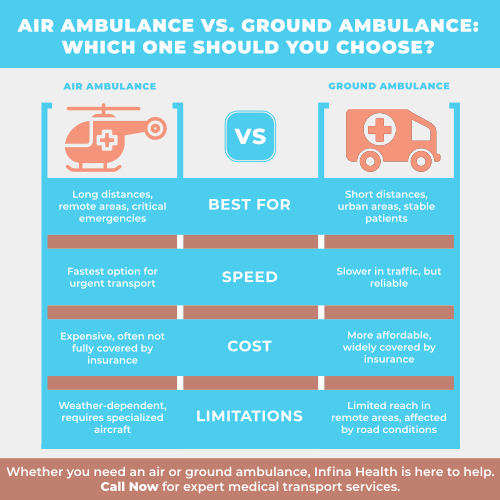
- Speed: The primary benefit of air ambulances is their ability to cover large distances quickly. In critical medical emergencies, time is often the most important factor, and air ambulances can reach a destination far faster than ground vehicles.
- Accessibility: Air ambulance services can access remote areas, mountainous terrain, or locations that are difficult to reach by road. Helicopters, for example, can land in confined spaces and bypass traffic jams or roadblocks.
- Advanced Medical Care: Air ambulances are equipped with state-of-the-art medical equipment, including life-saving devices, drugs, and monitoring equipment, making them an essential tool for patients requiring advanced medical attention during transport.
Drawbacks of Air Ambulance Services:
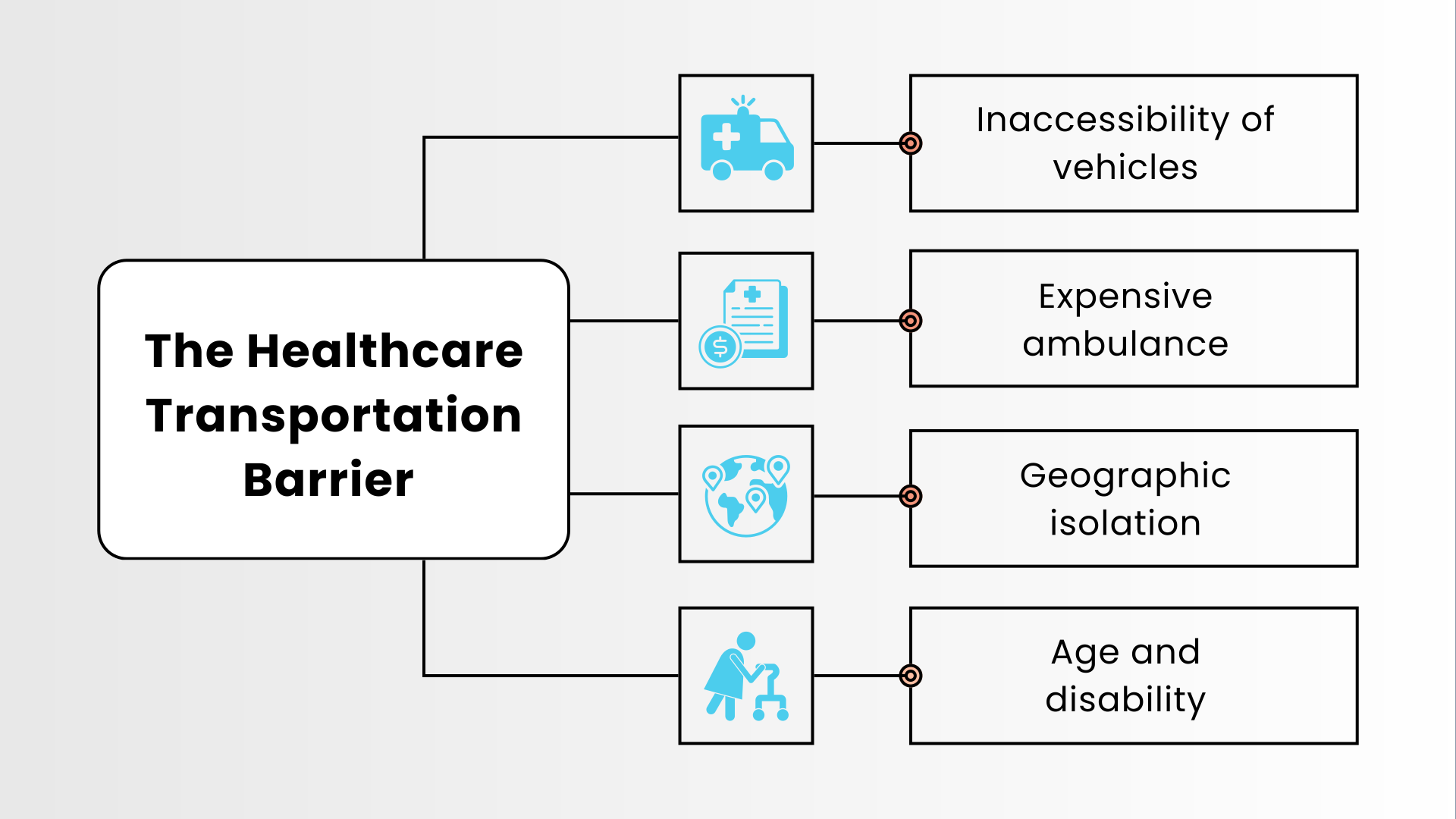
- Cost: Air ambulances tend to be much more expensive than ground transport. The operating costs for helicopters and fixed-wing aircraft are high, which translates to steep fees for patients or insurance companies.
- Weather Dependent: Air ambulances are highly affected by weather conditions. Inclement weather, such as fog, rain, or storms, can delay or even cancel air transport, making ground transportation the only feasible option.
- Limited Availability: Air ambulances may not always be available in rural areas or during certain times, especially if there is a shortage of available aircraft or medical personnel.
What Are Ground Ambulances?
Ground ambulances are the traditional emergency medical transport vehicles, typically consisting of equipped vans or trucks. These ambulances are used for a variety of purposes, ranging from emergency responses at the scene of an accident to transporting patients between healthcare facilities.
Types of Ground Ambulances:
- Basic Life Support (BLS) Ambulances
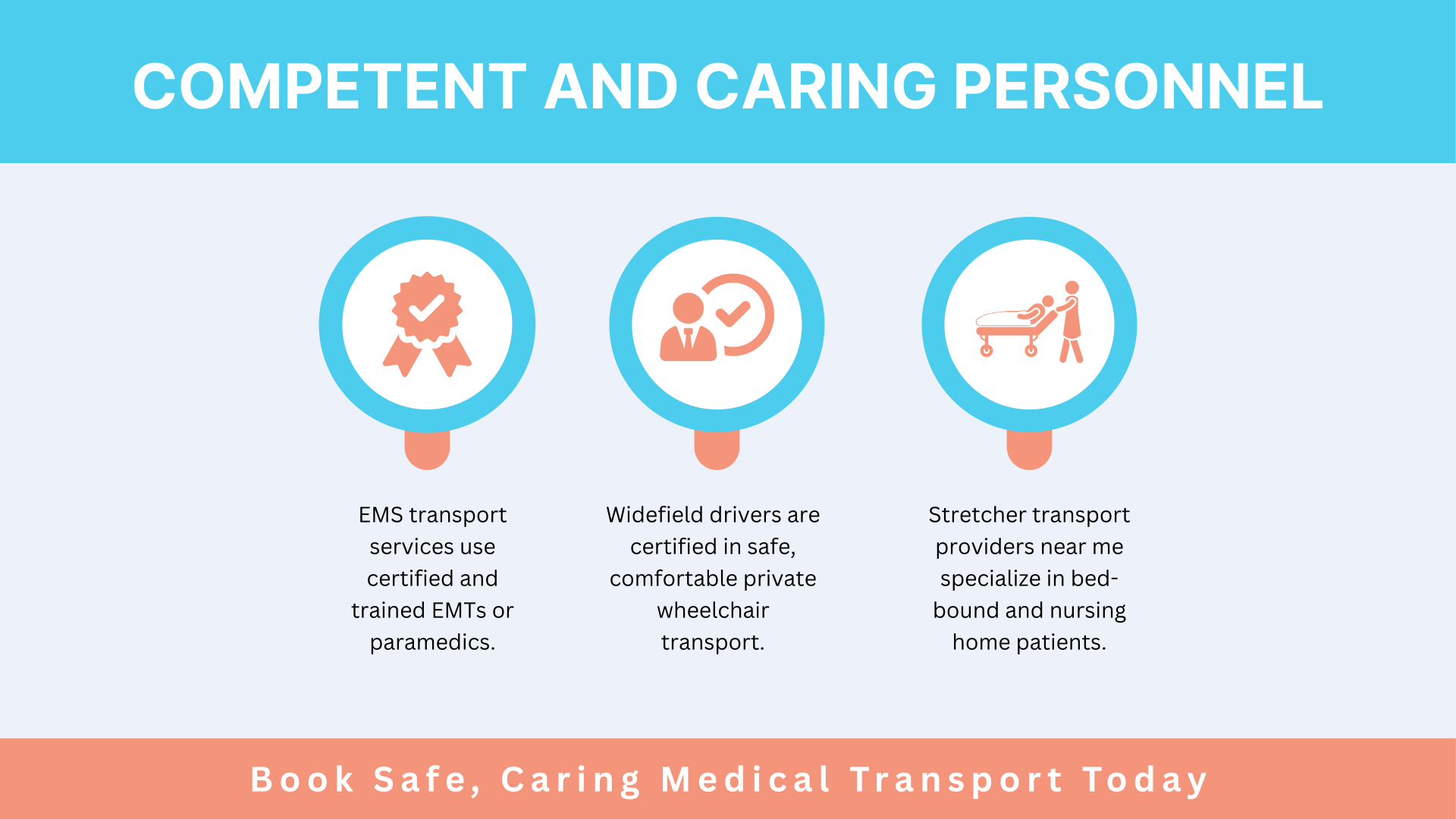
Basic Life Support (BLS) ambulances are used for non-life-threatening emergencies. They are staffed by emergency medical technicians (EMTs) who provide basic medical care such as monitoring vital signs, administering oxygen, and providing first aid. BLS ambulances are commonly used to transport patients with stable conditions who require minimal medical intervention.
- Advanced Life Support (ALS) Ambulances
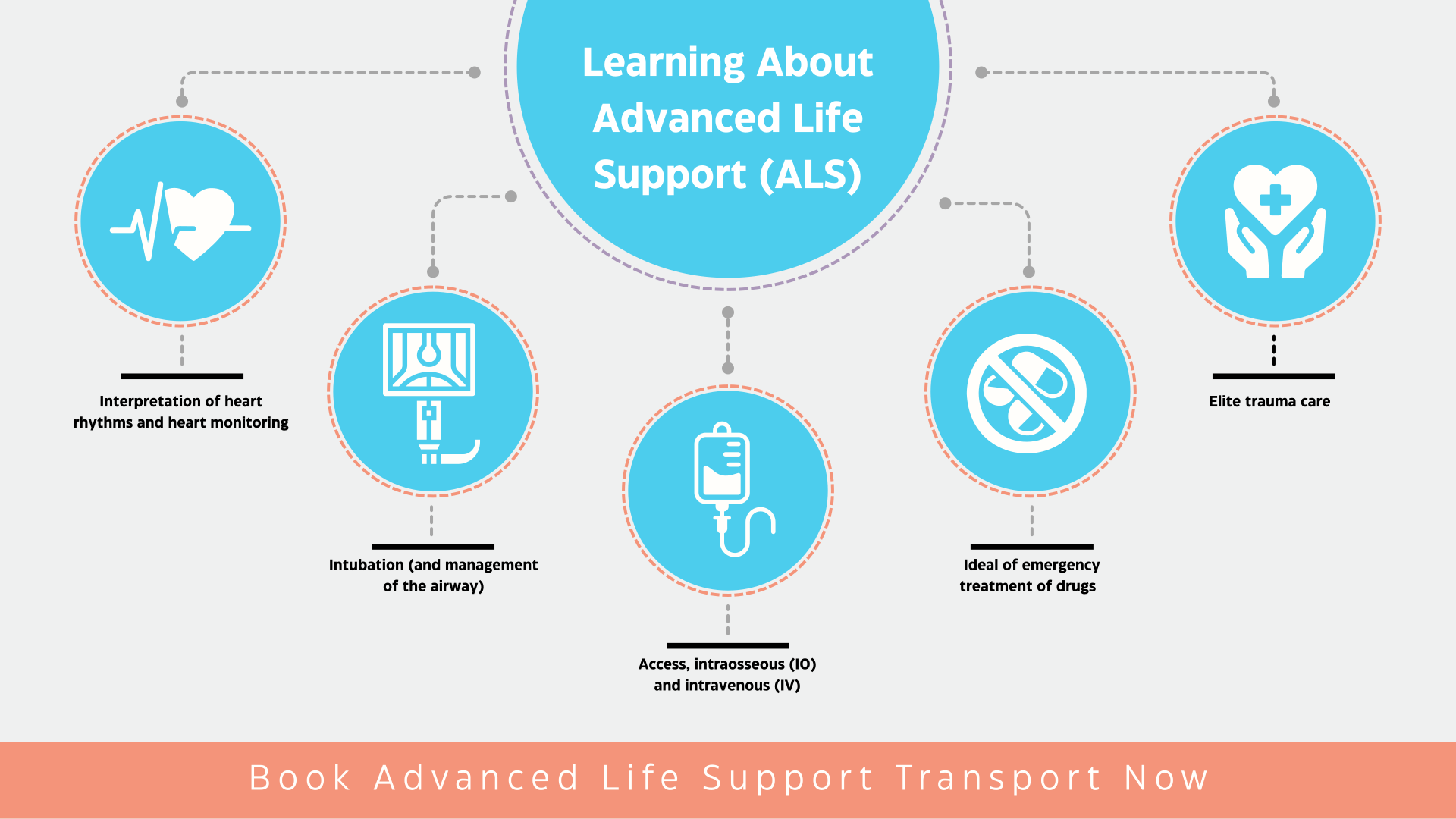
Advanced Life Support (ALS) ambulances are equipped with more advanced medical equipment and staffed by paramedics or critical care nurses. ALS ambulances are used for patients who require more intensive medical care during transport, such as those experiencing cardiac arrest, severe respiratory distress, or serious trauma. These ambulances are equipped with medications, advanced airway management tools, and defibrillators.
- Critical Care Transport (CCT) Ambulances
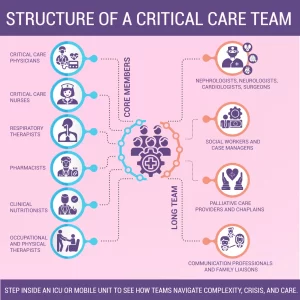
Critical Care Transport (CCT) ambulances are designed for patients with life-threatening conditions who need continuous, high-level medical care while being transported to a hospital or specialized care facility. CCT ambulances are staffed with highly trained medical personnel, including critical care nurses, respiratory therapists, and paramedics. These ambulances are equipped with intensive care unit (ICU)-level equipment, such as ventilators, IV pumps, and monitoring devices.
- Bariatric Ambulances
Bariatric ambulances are specifically designed for the transport of overweight or obese patients who require additional space and specialized equipment. These ambulances are equipped with reinforced stretchers, wider entryways, and additional safety features to ensure that bariatric patients are transported safely and comfortably. The medical equipment on board is adapted to accommodate the patient’s size, ensuring that they receive the necessary care during transport.
- Wheelchair Transport Vehicles
Wheelchair transport vehicles are specially designed for patients who do not require emergency medical care but need assistance getting to and from medical appointments or non-emergency hospital visits. These vehicles are equipped with secure wheelchair systems to ensure patient safety during transit. Wheelchair transport is typically used for patients who are stable but have mobility issues that prevent them from traveling in a standard vehicle.
- Stretcher Transport Vehicles
Stretcher transport vehicles are used for patients who are unable to sit up during transport but do not require immediate medical intervention. These vehicles are equipped with stretchers and basic medical equipment, making them ideal for patients with limited mobility or those who require a flat surface during transport. Stretcher transport is commonly used for non-emergency transfers, such as hospital-to-hospital transport or for patients who need routine check-ups.
Need a Basic Life Support (BLS) or Advanced Life Support (ALS) ambulance? Schedule your ground ambulance service with Infina Health today!
Benefits of Ground Ambulances:
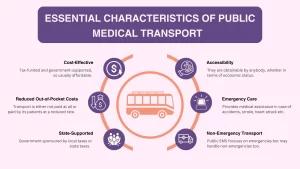
- Cost-Effective: A ground ambulance is generally more affordable compared to an air ambulance. While it is not without cost, it is often covered by most health insurance plans, making it more financially accessible for many people.
- Availability: A ground ambulance is widely available, and there is typically a higher density of these vehicles in urban and suburban areas. This widespread availability ensures quicker response times and more consistent access to emergency medical transportation.
- Less Affected by Weather: Unlike an air ambulance, a ground ambulance is not dependent on weather conditions. It can drive through rain, snow, or fog, making them a reliable option in many situations.
- Patient Comfort: A ground ambulance provides a more stable transport experience for patients. It is also less noisy than helicopters or planes, which can be beneficial for patients who are already in a state of distress or discomfort.
Drawbacks of Ground Ambulances:
- Slower Transport: Ground ambulances are slower than air ambulances, especially in heavy traffic or long-distance transfers. In emergencies where time is of the essence, this can be a significant disadvantage.
- Traffic and Road Conditions: In densely populated areas, traffic congestion can significantly delay ground ambulance travel times. Poor road conditions, construction zones, or accidents on the road can also further complicate travel.
- Limited Reach: Ground ambulances cannot access remote areas or locations where air travel is the only option. In rural or mountainous regions, ground ambulances may take longer to reach the patient or the hospital.
When to Choose an Air Ambulance Over a Ground Ambulance
While both air and ground ambulances serve important functions, the decision to choose one over the other depends on several factors. Here are the scenarios where an air ambulance is often the better choice:
- Long Distance Transfers: When a patient needs to be transferred between hospitals that are far apart, air ambulances are the fastest and most efficient means of transport.
- Remote Locations: Air ambulances are ideal when the patient is located in a rural area with poor road access or when the emergency occurs in a remote region, such as a mountainous or isolated terrain.
- Time-Critical Emergencies: For critical patients in situations like cardiac arrest, stroke, or severe trauma, air ambulances can be the best option to ensure rapid medical care and transport.
When to Choose a Ground Ambulance Over an Air Ambulance
On the other hand, there are several circumstances where a ground ambulance is the more appropriate choice:
- Short Distance Travel: For emergencies that are close to a medical facility, ground ambulances can often provide faster and more practical transport.
- Stable Patients: If the patient’s condition is stable, and they do not require immediate or intensive medical interventions during transport, a ground ambulance is typically sufficient.
- Weather or Cost Concerns: If the weather conditions are not favorable for air travel or the patient’s condition does not warrant the expense of an air ambulance, ground transportation may be the better and more affordable choice.
Cost Considerations
Cost is a major factor when choosing between air and ground ambulances. Air ambulances are significantly more expensive due to their high operational costs, fuel expenses, and the specialized equipment required. Ground ambulances are generally less costly, and in many cases, insurance companies will cover a larger portion of the cost.
It’s important to consider the financial implications of both options and to review your insurance coverage to understand what is covered in the event of an emergency.
Conclusion
In making the decision between air and ground ambulance services, it’s clear that both options have their unique advantages depending on the situation. However, ground ambulance services are often the most cost-effective and reliable choice for a variety of emergency scenarios. With their wide availability, skilled medical personnel, and less dependency on weather conditions, ground ambulances continue to be an essential part of the emergency medical response system.
Infina Health is a trusted provider of high-quality ground ambulance services, specializing in medical transportation with a focus on patient care, comfort, and safety. Infina Health’s team of skilled EMTs, paramedics, and medical professionals ensure that patients receive the best possible care during transport. Their fleet of modern, well-equipped ambulances is designed to handle various types of medical emergencies, ensuring that patients are swiftly and safely transported to their destinations. Whether it’s a short-distance emergency or a non-life-threatening medical situation, Infina Health offers reliable and affordable solutions for all your ground ambulance needs.
Whether it’s an emergency or a non-emergency transfer, our team is ready to assist. Contact us for reliable ground ambulance services.