 Careers
Contact
BOOK NOW
Careers
Contact
BOOK NOW

Mobility and Dignity Empowering the Older Adults of Pennsylvania.
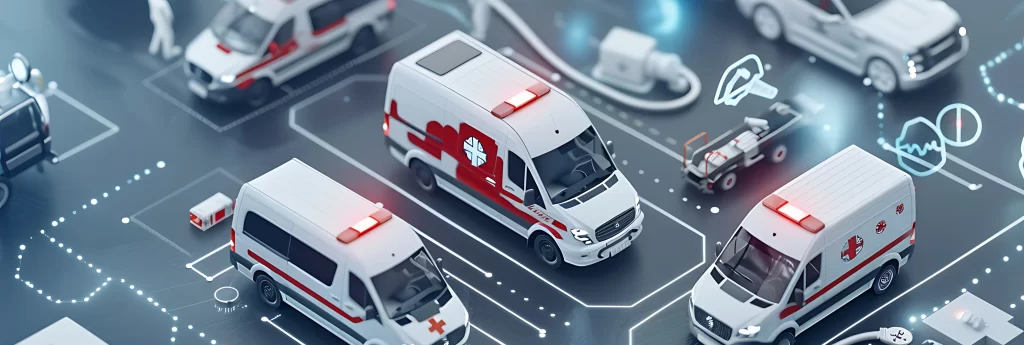
With respect to healthcare in particular, transportation is very critical but has been an oversight in terms of accessibility. A medical transportation service can guarantee patients to get adequate timely and safe care whether it is a primary or secondary dialysis appointment or a life-threatening emergency. Not every healthcare transportation is made equal though.
Whether it is advanced life support ambulances or non-emergency wheelchair vans, there is always a purpose of these means of transport. Knowing them will assist individuals, caregivers, and healthcare providers to make faster and wiser decisions as the patient.
Through this guide we will show you the various forms of medical transportation, their workings, the needs they cater, and how their providers such as Infina Health assist patients all throughout their path of treatment.
Emergency medical transportation can be defined as the ambulance services that are utilized in times when an individual is facing a critical or an emergency medical condition.
Anyone who is at risk of immediate illness and that may deteriorate without directions of the assuring medical care.
ALS transportation is an intermediary between regular ambulance transportation and higher-level medical care, considered by special patients who are either gravely ill or at risk and have to be monitored during transportation assuming constant medical attention.
Advanced-trained EC Certified paramedics (EMT).
Patients that are unstable, complicated, or demand constant attention, during the relocation.
BLS transportation is non-mindful medical transport alternative that is rendered to stable patients who are in need of medical support and observance.
Those patients, who are not in critical conditions but cannot use ordinary car or travel alone because of medical reasons.
NEMT plays a crucial role in serving patients who should be transported to medical consultations in cases when they do not need emergency or devices to support life. It is a Medicaid covered option or a privately paid one in the majority of states, like Pennsylvania.
NEMT saves missed appointments, improves patient results and minimizes hospital readmissions.
This group of transportation is applied by some patients who are in wheelchair or unable to sit on their own because of injury or the natural lack of ability but may need no treatment during the transport.
To make sure that the patient is as comfortable and dignified as possible in his or her ride, the services of providers such as the Infina Health are offered as customized wheelchair and stretcher transport.
Bariatric transport is particular to the needs of obese or bariatric patients that need special equipments and personnel to safely transport and take care of them.
EMTs or paramedics who are the ones educated to keep bariatric cases handled in a sensitive and medical precautionary manner.
Such a service helps to minimize the risk of an injury and preserve the dignity of the patient and provides safe transportation.
Long transfer refers to lengthy medical transportation or travel that is carried out to interstate or intercounty transfer of a stable patient who needs to be under professional supervision or provision of special facilities.
Providers, such as Infina Health, are providing long-distance medical services across Pennsylvania and adjoining counties and states, ensuring that care does not put up stops at county borders.
The non-threatening transportation tends to be specialized because psychiatric patients who are undergoing crises or have persistent mental health problems commonly require assessment prior to coordinates transfer or admission.
This service mitigates the risk of escalation and provides safe and compassionate transportation of a person in the state of a mental health crisis.
Proper usage of mode of transport:
Selecting the level of care will make certain that:
Infina Health pairs each patient with the appropriate service taking into account the condition, urgency and destination of the patient, making healthcare personal, efficient, and compassionate.
Since the most basic to the supportive NEMT services, medical transportation has really become the fundamental aspect of modern healthcare in Pennsylvania as well as in the country.
Being the survivor of surgery, living with chronic diseases, taking care of an old relative or family member of yours- your transport partner is important.
Infina Health is a company that focuses on all types of medical transportation:
We are a certified team of medical professionals, state-of-the-art scheduling, and safety and compassion partners of Pennsylvania.
You can give us a call today or visit our website at www.infinahealth.com to book your ride and/or get to know about our entire line of services.
Safe & Reliable Medical Transportation at Your Service
Don’t let transportation challenges stand in the way of your healthcare. Discover the right medical transportation services tailored to your needs.


Infina Health has been providing transportation services to the residents of Pennsylvania for over 70 years. Our mission is to ensure the comfort of our passengers.



© 2026 Infina Health. All Rights Reserved.
