1. Executive Summary
Ms. Aisha M. was a 68-year-old woman resident of rural Worcestershire, who had to undertake significant difficulties in managing Type II diabetes, stage 5 chronic kidney disease, and limited mobility because of neuropathy changes. Going to her closest dialysis facility in Birmingham, a journey of almost 90 miles, daily 3 days a week became increasingly difficult not only physically but also emotionally. Fluid overloads, high costs of care provision, lack of quality life occurred because of missed sessions.
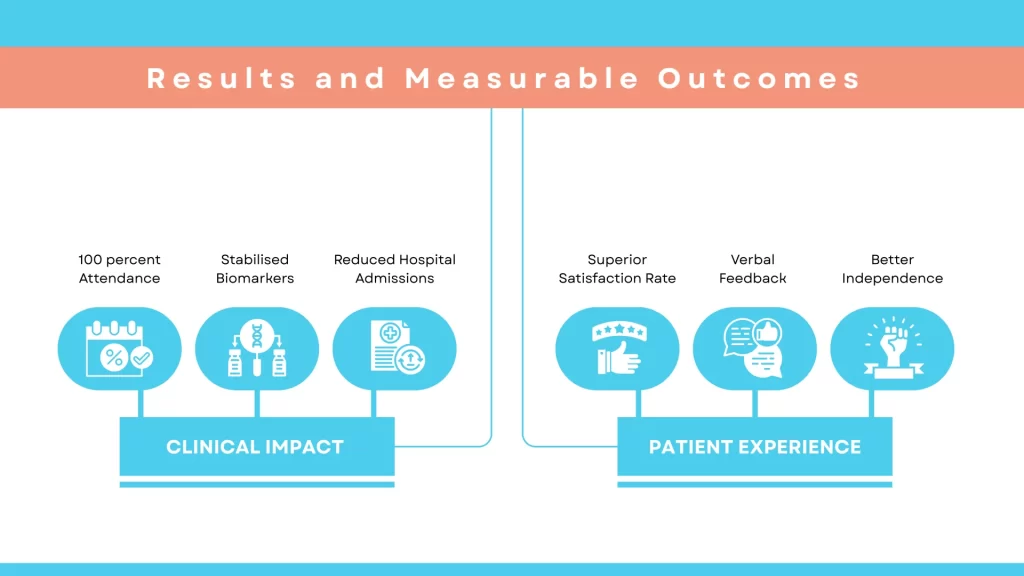
Infina Health came in with a planned care-coordinated transport strategy that provided consistent care transport services when it comes to dialysis transport services that matched her clinical and psychological needs. During the course of more than half a year, Infina allowed attending 72 dialysis sessions by its client with a guaranteed 100 percent session attendance, stable clinical indicators, as well as a marked improvement of emotional well-being. Still, it is worth noting the fact that Ms. M. no longer experienced as many hypoglycaemic episodes as possible, Edema decreased, and she felt independent.
Infina integrated route efficiency, trained transport staff, and patient-centred communication with in-transit vital monitoring and transformed transport into an active part of clinical care. Medical transport can create links to healthcare access and patient adherence, which is possible to see on this case with regard to medically complex groups of patients. It also demonstrates the importance of preventive, routine transport and management of chronic diseases.
2. Medical Background and Clinical Setting
Patient Profile:
- Name: Aisha M.
- Age: 68
- Conditions: Type II diabetic with neuropathy, stage 5 CKD on haemodialysis thrice a week, hypertension and diabetic retinopathy
- Mobility Level: Has difficulty walking more than 20m, frequent episodes of orthostatic hypotension.
Healthcare Setting:
Ms. M. lived in a small town in the countryside with poor transport providing the city with access. Her nearest dialysis centre was 45 miles distant. The transport was tedious and tiring, and her transport was frequently delayed or cancelled due to poor weather resulting in a missed session. It led to fluid retention, hypertension crisis, and emergency visits.
Effect of Non-Attendance of Sessions:
Each missed dialysis appointment presented an immediate risk: elevated potassium levels, water retention, high blood pressure and subsequent periods of emergency treatment. Ms. M. was subject to three emergency transports in three months (transport cancelled or delayed): two times because of fluid overload, once because of severe hypoglycaemia caused by missed meal prior to session.
Social and Emotional Effect:
The fear of transportation had a horrible effect on her emotions. She cited anticipatory dread in the presence of travel days, the fear of falls during transfer, and frustration of dependence. This greatly decreased her eating habits, sleeping and participation in personal care routine.
Healthcare Coordination:
Her doctor (nephrologist), Dr. Kumar, made an urgent referral to a stable means of transport that would secure her treatment appointments. Before the next session, her primary care team collaborated with Infina Health to set a regularized and weekly transport protocol, including pre- and post-session vital checks and personalized help during boarding.
3. Identification of Challenges
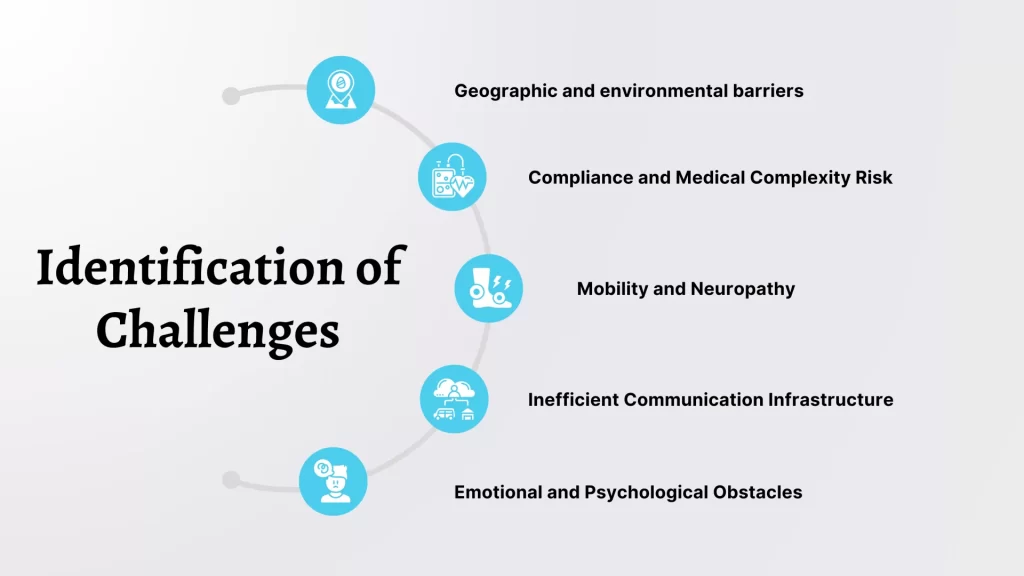
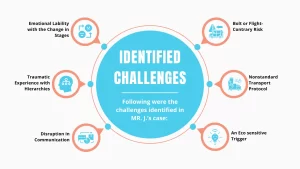
The intervention process of the case of Ms. M., a 66-year-old diabetic patient with end-stage renal disease, initiated with the identification of the barriers that previously long interfered with her life continuity and the quality of life. Based on the assessment of her care team, transport coordinators, and social workers, five very problematic areas of challenges were uncovered and will have to be strategically resolved.
A. Geographic and environmental barriers
The dialysis centre was more than 30 miles away in a rural environment where Ms. M. lived in an underserved location. The topography involved filthy roads, lots of snow during winter seasons and small gravel tracks, which were quite impassable during rainy days or freeze. Such environmental conditions did not only create problems in the transport timetabling but also put immense pressure on regular cars.
The informality in the majority of local transportation was caused by the remoteness of the area, as either cabs without any medical background came to the rescue or networks of volunteers who were not ready to take people who needed help with oxygen tanks, diabetic foot protection, or questions of instability. Missing, tardiness, and breakdowns were a popular way of life. Such variations jeopardize her compliance to dialysis regularly.
B. Compliance and Medical Complexity Risk
Treating a diabetic patient with dialysis is a special risk, particularly with regard to fluid crossovers, glucose, and potassium. A single missed dialysis session may lead to fluid imbalance, electrolyte imbalance or cardiovascular diseases. Ms. M. was also at risk due to the unpredictable pre-appointment practices. She also could risk and become hypoglycaemic during transportation or during her dialysis sessions unless she had eaten right or had injected her insulin under supervision.
The earlier providers did not check on such preconditions prior to pick up. On another occasion, she fainted during the trip and was taken to the ER because of low blood sugar but pre-transport monitoring would have eliminated that issue. Her chart was marked with several instances of the label of non-compliance, but not because the patient refused, but because there were holes in the planning of transportation and clinical context.
C. Mobility and Neuropathy
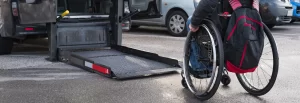
Ms. M. had peripheral neuropathy of progressed degree, and it resulted in a diminished feeling in her feet and legs. This made her walk shorter distances and footings quite difficult and, in many cases, the need to be assisted. Nonetheless, in the past, inconsistent or untrained escort support caused fall incidents such as head injury when she was trying to transfer out of a van into the ramp of the dialysis facility clinic entrance.
She had equipment (a rolling walker and protective leg wraps) which was frequently either lost or put on carelessly. These mobility risks not only rendered transport to be stressful but dangerous.
D. Inefficient Communication Infrastructure
There was a virtually non-existent coordination between the transport provider to Ms. M., dialysis team and home nurse prior to the intervention of Infina. She was often informed about transport delays or cancellation only an hour or two before she was supposed to be picked up. It lacked a centralized system where the appointment could be rescheduled, or her insulin or hydration plan could be corrected. Her care team could not communicate real-time information with drivers of the transport on the issue of urgent medical precautions, like unstable glucose readings or recent infections.
This discontinuous communication led to frequent failure of continuity of care.
E. Emotional and Psychological Obstacles
Fear of not knowing, rescheduling appointments, being considered an afterthought had worn Ms. M. out emotionally. She noted severe nervousness on each transport day that commenced hours prior to the pickup. The fear of being forgotten, showing up late and being turned down or falling with no one around was the worst to her. This emotional stress tended to make her skip dialysis appointments as a whole in panic or exhaustion.
She called it “a spinning wheel of stress.” The emotional burden concerned her daughter, who was traveling three hours to see her, as that was speeding up the deterioration more than the disease. Ms. M. was starting to cut herself off, to lose trust, and accept that care gaps were normal, until Infina entered the picture.